News

The Joy of the Deli Counter

The joy of the deli counter

.

The Joy of the Deli Counter

As the breadwinner (not a nice word, a.k.a. the one who escapes to the office rather than the one who has the much harder job of looking after the children) in a family of five, I am always looking for ways to economise whilst still eating well.

I have recently discovered the joys of the deli counter.

For those who have been shopping like this for years I apologise, but it’s like a revolution for me! Despite my rigorous approach to fridge management – I despise throwing away food – we often find ourselves wasting a couple of slices of cold meat when they are out of date. Unlike cheese or fruit and veg I always stick to the use-by dates on meat. It’s particularly aggrieving as it’s not cheap to buy! A good-quality packet of meat can cost several pounds.

I considered stopping buying cold meat altogether but it is so useful for our family for quick and tasty meals: Combined with a scrummy chutney for a speedy sandwich. On the side of a baked potato with lots of salad and some pickle. Children’s tea served with de-frosted mash (we always cook a huge batch and then freeze children’s-sized portions), peas and a splash of gravy – instant ‘ready meal’.

So, I decided to try the deli counter in our local supermarket. Woohoo! There was so much choice; I could buy apple-roasted ham, free range turkey and many other delights. Of course, I could also purchase as much as we need rather than the number of slices a packet dictates. After choosing carefully I discovered it could cost half the price of my usual purchases. Win, win, win.

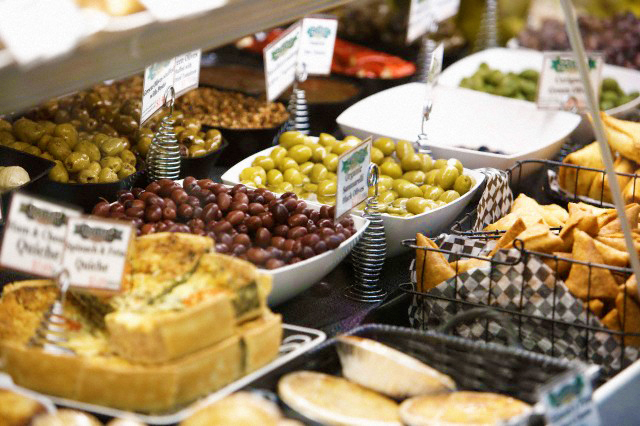
I visited our local delicatessen this morning too. It’s hard to avoid temptation in such a culinary Aladdin’s cave. I could have spent a fortune. But I stuck to my list and came away with just three slices of cranberry-roast ham and a pot of home-made coleslaw. It set me back the princely sum of £2.60 and will make several delicious lunches.

So if you’re on a budget or you love good food (or both) pop in to your local deli or deli counter. You can pick up some delicious morsels at great prices – just avoid those delectable stuffed olives than will set you back a fiver for a tiny handful!

Creamed-Corn-&-Ham-Scramble-recipeWhy not try this delicious
lunchtime recipe using ham
from your favourite deli?

Creamed Corn & Ham
Scramble recipe.

Recipe taken from the
Dairy Book of Home Cookery
available to pre-order online
at the end of this month.

Say no to 0870

Say no to 0870

.

Say no to 0870

The next pocket diary is now finished and has gone off to print (thank goodness!) This is never one of my favourite jobs, as there are no images or fun features but lots of facts and figures to check and edit correctly.

However, it has to be done properly and my challenge this year was to see how it could be improved.

It is sold in the Set with the Dairy Diary, which is usually kept in the home. The pocket diary is usually kept in a handbag so I wanted to ensure that any information it provides would be useful outside of the home.

Therefore, any contact numbers
should be relevant to mobile phones.
This is where my challenge got a bit
more difficult.

The majority of businesses (including us, though this is something we will change) provide 08 contact numbers. These are usually charged at a local rate from a landline, which is great. HOWEVER they cost a lot more from a mobile and are not usually included in any free minute packages.

I found a website saynoto0870.com which is extremely helpful. Using this I have managed to track down the majority of numbers and give their 01 alternative. These 01… numbers can also be useful if your home phone contract does not allow 08 numbers within any free minute packages too, though I think most are changing their policies to allow these now.

0300
One number that is did discover is a 0300 number, this has been set up by Ofcom to try and regulate the industry. Calls to 03 numbers must be included in any inclusive minute packages offered by all landline and mobile providers. Let’s hope that there are more of these in the future.

How to Create a Healthy Eating Plan

How to create a healthy eating plan

.

Creating my Healthy Eating Plan

I have a couple of significant and glamorous birthday parties looming and they have given me the kick up the trousers I need to sort out my diet.

Yes, I eat prettily healthily – I don’t drink sugary drinks (except from the odd glass of wine of course!), I don’t live on ready meals, I try to avoid too much pastry and I rarely eat takeaways.

BUT my downfall is my sweet
tooth, particularly chocolate.

I tend to snack on sugary things a little too often, which is not a great idea given that I have a higher than average chance of developing late-onset diabetes. So, these few pounds that I want to lose for the parties have made me reflect on what I eat and how I eat and I am determined to change my habits forever and hopefully avoid health problems later in life.

My main problem is that many of the foods I currently eat give me a quick blood sugar high followed by a sharp drop. I should be eating foods that keep me fuller for longer and release their energy slowly.

So, this is my plan of action.

  • On my plate always have ¼ carbs, ¼ lean meat or fish and ½ veg or salad.
  • Limit my bread consumption, eating a little wholemeal in the week and treating myself to some gorgeous homemade white toast and butter on a Sunday morning only.
  • Eat a mid-morning and mid afternoon snack. Either a piece of fruit or a small handful of almonds.
  • Eat wholewheat pasta (and as above, less of it) and basmati rice or brown rice.
  • Eat fat free Greek yogurt after dinner (with blueberries or a tiny drizzle of honey) instead of my usual snack-size bag of Maltesters.
  • On a Friday night, let my hair down and ignore all of the above! Well, you only live once


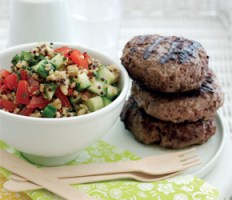
Beef Burgers with Mixed Grain SaladWhat are your top tips
for staying fit and healthy?

Try out this Beef Burgers with
Mixed Grain Salad recipe from
the 2014 Dairy Diary.

It ticks all of the boxes, and is
quick and tasty too!


Easter Recipes & Crafts

Easter Recipes & Crafts

.

Easter Recipes & Crafts

As a mummy (as of yesterday ‘Mum’! to my grown up five year-old) of three small children, I am usually insistent that we get outdoors and burn off some energy whatever the weather.

However, this weekend proved to be so bone-numbingly chilly that we retreated indoors and crafted. The final results were not always worthy of a country magazine, but we had fun none the less and our nearest and dearest will receive some almost-pretty Easter goodies next weekend.

Easter Bunny & ChickOne of our favourite projects was Easter Bunny & Chick from Buttonbag. They look very cute adorning the top of our mantelpiece.

I also treated myself to an hour alone (bliss) in our local town perusing the deli and flower shop for seasonal inspiration.

After choosing a few miniature daffs
and the ingredients for our famous
Simnel cake, our house is looking,
and smelling, particularly spring-like.

Shame the outside does not mirror this!

.

> Try the Simnel Cake for yourself, it’s delicious. And this Fish Pie is perfect for Good Friday.

Easter recipes from Dairy Diary


Have a wonderful Easter everyone.

Recipes for Mother’s Day

Recipes for Mother’s Day

Recipes for Mother’s Day

I have been a mum for just over five years now but I still get butterflies and that little flush of pride as Mother’s Day approaches.

Sorry to sound clichéd and slightly slushy here but there’s nothing more special than being a parent and when you have to wait a long time for little ones to come along as I did Mothering Sunday never loses its shine.

Of course, I have my own fantastic
Mummy who needs to be spoilt on
Sunday too, so this week will be a
flurry of craft and cooking.

With my card-making obsession, there’ll be a home-made card and some naughty-but-nice goodies too (as well as a rather beautiful Cath Kidston bag to take on her next holiday.)

Here’s what I have chosen to cook for our special Mum’s afternoon tea party:

Both these recipes come from Take a Box of Eggs. Of course my mum and I have one of these but there are many that don’t and would love one!

Take a Box of Eggs is our latest award-winning cookbook, which features 100 delicious easy and accessible dishes for all the family. Why not treat your mum or yourself?

This month postage is free! So you can pick one up for just £7.49.

How to grow kitchen herbs

Herbs

.

How to grow your own herbs for the kitchen

Whilst doing all the testing for our next cookbook, I have come to realise just how expensive fresh herbs can be. They don’t last long in the fridge either and often go to waste if I forget to freeze any leftovers.

So, this year I am
determined to grow
my own.

It will be wonderful to step out of the kitchen door to the subtle scent of sage, mint and rosemary, and be able to clip a few leaves off to add to salads, soups and stews.

Here are some tips on how to sow your own seeds. Something I haven’t done for a long while!

Grow kitchen herbs

Grow kitchen herbs

Pot Herbs for the Kitchen

Fresh herbs give a great lift to many foods – so grow your own in pots sited near the kitchen for ease of picking. And why not choose some colourful, fun containers to plant in?

Sow seeds in March, or buy small herb plants in April or May, pot up at once and start picking leaves as soon as the plants have grown slightly. A sunny position is best. The job will take about an hour.

What you need

Plants Seed packets or small plants of parsley, thyme, marjoram (oregano), sage, mint and rosemary.

Equipment Six small plastic pots for potting up seedlings bought at the garden centre. Seed tray, modular cell system or jiffy pots for sowing seeds, if using. Five containers such as the enamel kettles. Soil-based potting compost and proprietary seed compost if using. Broken crocks for drainage. Trowel.

Instructions

1 Fill the seed tray or modular cell system with seed compost and sow your seeds according to the instructions on the packets, or sow in jiffy pots according to the manufacturer’s instructions. Keep on a kitchen windowsill while the seeds germinate, then move them outside when all danger of frost is past.

2 When the seedlings are large enough to handle, pot them on into the plastic pots using potting compost and lining with broken crocks for drainage.

3 Or, line the plastic pots with broken crocks and fill with potting compost, into which you have mixed some sharp sand (if using). Then plant your garden centre seedlings, place into the containers and set out in an attractive arrangement. In general, allow one herb per container, but if the container is big enough, put several in together – here rosemary, parsley and mint have been put in the central container.

4 Place the young herb plants outside only when all danger of frost is past. If you’re uncertain, place them outside on sunny days and bring them in at night until the weather warms up enough for them to be left outside permanently.

5 Pick and use the leaves regularly. All these herbs can grow quite large and, by the end of summer, may well have outgrown their containers unless you keep them under control.

Notes Most herbs do best in full sun. They don’t require rich soil, but they must not be allowed to get waterlogged, so good drainage is essential. Rosemary, sage, thyme and marjoram are tough, shrubby plants and can be kept going for years if put into the ground or grown in large enough pots. Mint and parsley are herbaceous and will die down in winter, but reappear again in spring.

Aftercare Regular picking is needed, and watering with care.

.
Seasonal Garden IdeasThis project is taken from
Seasonal Garden Ideas 

a collection of lovely, easy
projects for any garden.

Now available online
for just £3.99  

PLUS FREE P&P!
(Feb/March 2013 orders).

1 39 40 41 67