News

Discover incredible award-winning wines in English Wine Week


English Wine Week

.

Discover incredible award-winning wines in English Wine Week

I’m quite a fan of those jolly autobiographical books about people who venture to France to run vineyards with all the humorous pitfalls and quirky characters they meet.

However, apart from a fleeting glance at one of those mind-zappingly slow pace county programs, I have never really considered English wine. I shamefully head for the new world section of my online shopping basket for my favourite quaff. Perhaps it’s time to a re-think.

It is widely believed that the Romans
first introduced the vine to England
and wine-drinking became
commonplace in British society.

1066 marked the start of an era of viticultural activity with William the Conqueror came French Abbots and their monks who were experienced in winegrowing, along with soldiers and courtiers for whom wine was a daily requirement. From the Middle Ages however, viticulture began to wane and it wasn’t until 900 years later, in the 1950s that there was a commercial revival in wine production.

English Wine WeekNowadays there are 432 vineyards in the UK, producing a staggering 2.58 million bottles of wine! 60 per cent of the wines produced are sparkling and in the last 15 years English sparkling wines have won 8 trophies for Best International Sparkling Wine and 4 Trophies for Best Sparkling Rose in Global Competitions – no other country has achieved this!

With those accolades, they must be well worth a try.

This week is English Wine Week, which plays host to a raft of events to celebrate English wine. Visit http://www.englishwineproducers.co.uk/news/events/ for a list of events, including vineyard tours and wine tasting.

Bank holiday bake – the best gingerbread you’ll ever taste

Gingerbread animals recipe

.

Bank holiday bake – the best gingerbread you’ll ever taste

Wow, I’m glad it’s a bank holiday! It’s been super-busy during the last couple of weeks, kicking off the books that will go on sale next year.

Each book requires meticulous planning to ensure that everyone shares the same vision and plays their part at the right time to fit in with the rest of the team. I need to ensure that recipes are ready for the editor and the testers and then I need to ensure that recipes are tested and edited before photography commences.

Food photography is a very expensive business as there are high studio costs as well as the cost of the photographer, food stylist, props stylist and prop hire, and so you don’t want to be shooting a recipe that doesn’t work properly!

I begin the whole process with a synopsis of the book, and then I create a schedule for the year, which shows everyone’s responsibilities, this is followed by written a brief for each member of the team.

It’s like a huge jigsaw puzzle,
which is why I am relishing
the extra day off this weekend!

I plan to relax and bake some gingerbread with the children.

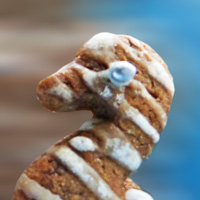
This is my favourite gingerbread recipe. We like to use quirky cookie cutters, such as pigs and sheep and decorate with icing and other bits and bobs from the baking basket.

They taste really treacly, quite different from a shop-bought gingerbread man, but that’s one of the reasons they’re a family favourite.


Gingerbread Animals recipeGingerbread Animals

Makes 26
Preparation 25 mins
Cooking 15 mins Per portion 268 kcals, 11g fat (6.6g saturated)
Suitable for freezing
Suitable for vegetarians

110g (4oz) plain flour
50g (2oz) soft brown sugar
1 tsp ground ginger
50g (2oz) butter
1 tbsp milk
2 tbsp black treacle
Currants to decorate

1 Place flour, sugar and ginger in a bowl and mix together. Make a well in centre of dry ingredients.

2 Put butter, milk and treacle into a small saucepan and heat gently until butter has melted. Remove from heat and cool for 2–3 minutes.

3 Pour butter mixture into dry ingredients and mix with a wooden spoon to a soft ball.

4 Leave mixture to cool until firm to touch.

5 Roll out on a floured work surface until 0.5cm (¼in) thick. Cut out with a gingerbread man cutter. We use any animals cutters that the children choose and then decorate with icing (made with icing sugar and a couple of drops of water) and cake decorations.

6 Transfer to a greased baking sheet using a palette knife or fish slice. Allow room for them to spread.

7 Decorate with currants for eyes, nose and buttons.

8 Bake at 180°C (350°F) Mark 4 for 10–15 minutes.

9 Leave to cool for 3 minutes. Transfer to a wire cooling rack and leave until cold.


Dairy Book of Home CookeryCan you guess where this recipe is from?

Yes, of course, it’s one of those family classics from the Dairy Book of Home Cookery.

Our family could not survive without this book!

Buy Dairy Book of Home Cookery


.

.

.

.

.

.

.

.

.

.

Wellies – the best thing you can ever buy for your child

Wellies - the best thing you can ever buy for your child

.

The best thing you can ever buy for your child

Plus a freebie and a chance to win a cookbook! 


What’s the best thing you ever bought for your child?

Wellies-2My finest purchase has to be wellies – they have undoubtedly created more fun than anything else we have ever bought.
On rainy days they are
perfect for jumping in
muddy puddles.

On icy outings they are ubiquitous for crunching through new-fallen snow and on sunnier occasions they are essential for wading into streams looking for wildlife or sploshing into the sea to jump the waves!

In this digital age (yes I am aware of the irony of typing this on a blog!) it’s vitally important that we get family time outdoors.

And in Britain the majority of us are blessed with fantastic green spaces on our doorstep, whether it is a village green, town park, sandy beach or ancient woodland.

I love the fact that we are a country of such varied and stunning topography packed into such a small space.


Win Clever One Pot cookbook

I recently asked Dairy Diary Facebook followers to share their favourite places and promised to add them to our Pinterest board, which you can see here http://www.pinterest.com/dairydiary/the-beautiful-british-isles

Your favourite British landscapes

Can you help me add even more? Where in Great Britain do you love most? I promise to add all to our Pinterest board and we will give away a copy of Clever One Pot cookbook to our favourite suggestion.


Free Spotter List

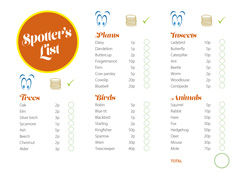
Spotter's ListAnd here’s a little project to help you and your little (or not so little) loved ones enjoy and engage with the great outdoors as well as helping with their numerical skills.

It’s something that kept me
occupied on many long
walks as a child and a game
that my children love too.

You provide your child with a list of things to spot (free Spotter’s List to download below) and reward them with a few pence. You’ll have to hoard loose change in advance, though your child should only get their reward for spotting each item once, not multiple times or it may get expensive!

Download our free Spotter’s List here.


Have fun in the great outdoors everyone!


#thedairydiary #competition

.

.

.

.

.

.

.

.

.

Mark National Stationery Week with this easy 5 minute craft project

National Stationery Week

.

National Stationery Week

Mark National Stationery Week with this easy 5 minute craft project

It may be a girl thing, but ever since my friends and I were small, we have loved stationery.

The fruity aromas from scented erasers, the pretty patterned notebooks, gorgeous folders and the joy of a new box of pencil crayons – stationery provided endless delights.

It’s quite handy then that as
my chosen career I work on
several stationery products!

National Stationery WeekI also like to dabble in crafts now and again and have had a go at these cute little button paperclips. They’re ever so slightly fiddly but only take a couple of minutes and they’re so cute!

  1. Simply find a few pretty old buttons (the ones with sticky-out backs).
  2. Cut a narrow piece of masking tape and thread through the back.
  3. Place the curve of a (matching) paperclip over the back of the button and stick down the tape.

These are ideal for attaching to postcards and thank you cards with a small token gift.

NATIONAL STATIONERY WEEK

  • Received flowers? As a thank you, post a card with a packet of flower seeds attached.
  • Enjoyed help from a friend? Send a card with a sachet of hot chocolate and the message, ‘Relax with a cuppa’.
  • Enjoyed a fabulous party? Say thank you with a card and bookmark.

.

Now, bag a bargain AND get a very handy FREEBIE.

Dairy Diary Address BookThe Dairy Diary Address book is back by popular demand, as an extra special treat we’re throwing in a FREE Notes Organiser with every purchase!

Get yours quick before they sell out –  at just £3.50 they won’t be around for long.

Buy Dairy Diary Address Book


.

.

.

.

.


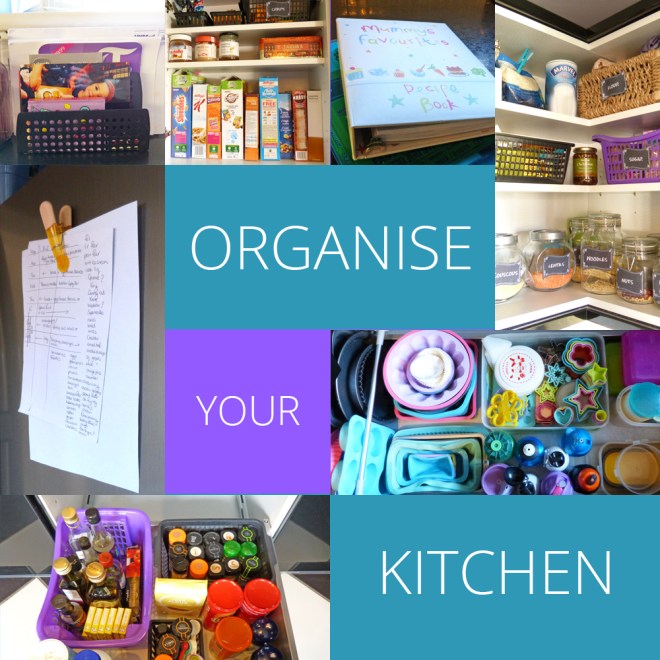
Organise your kitchen in 3 easy steps

ORGANISE-YOUR-KITCHEN-MONTAGE

.

Spruce up for spring:


organise your kitchen in 3 easy steps


(no DIY skills required!)


I know how you love to be organised – you use the Dairy Diary after all! So I thought I would share a few clever ways to organise your kitchen.

There’s nothing worse than wanting to whip up a few fairy cakes, then all your baking equipment topples out of the cupboard the moment you try to retrieve something. This can be remedied in just a few hours.

I spent a morning, and just a few pounds creating a much more user-friendly kitchen. I can’t wait to get cooking! (Or will I not want to disturb my beautifully arranged cupboards?!)

 1.    First declutter:

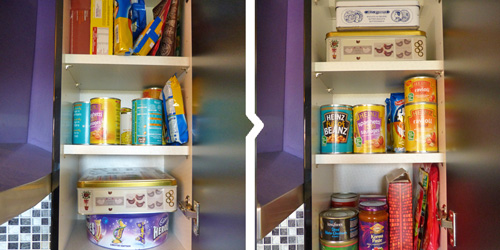
Before you begin to re-arrange things, first go through everything you have. If there is any crockery, kitchen equipment etc. that you haven’t used for over a year donate it or recycle it. Check use-by dates and throw out any foods past their date. Then think about putting items nearest to where you actually use them and swap the contents of a few cupboard/drawers around. Change the height of shelves to best fit what they contain.

 2.    Invest a few quid:

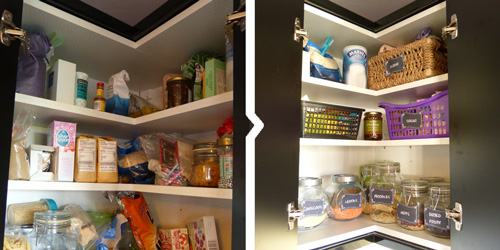
Spend a few pounds (in one of those bargain shops that only charge a £1) on baskets of various sizes and jars. Or keep any baskets, tins and jars from packaging – they can be much prettier than bought ones too.

 3.     Now organise:


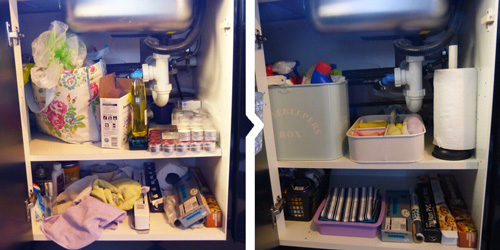
Organise-your-under-sink-cupboard

Under the sink

Roll up cloths neatly and pop into a tray, use a bucket or box with a handle for cleaning equipment, use a plastic shower box with suckers to attach to the door for dishwasher tablets and pop any other bits and bobs into baskets.


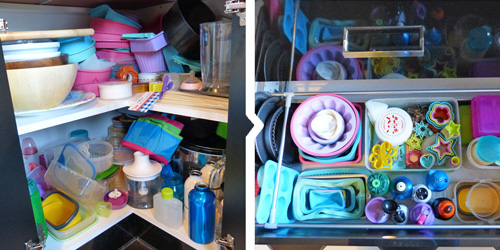
Organise-your-baking-cupboard

Baking equipment and ‘Tupperware’

These work much better in a deep drawer if you have one. Sort into shapes, then sizes, and stack neatly inside one another. Line trays and larger thinner tins up on their side so that they are easy to access and don’t take up a lot of space. Do you same with sandwich box lids. Squeeze any drinks bottles into spaces you have left. Use a box or tray for cookie cutters and cake decorating equipment.


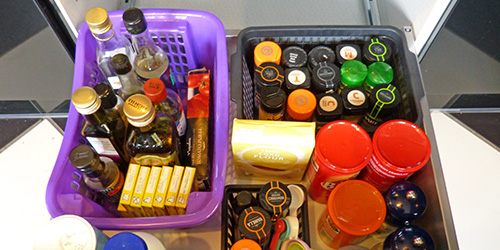
Organise-your-condiment-drawer

Food stuff

Sort into food types – cans and packets of convenience food; cooking sauces and ingredients; herbs and spices; oils and vinegars, baking ingredients; cereals etc. Pack into various trays, tins or baskets suitable for the shelf and food, then label (you can download free labels from here. http://blog.worldlabel.com/2013/kitchen-spice-jar-pantry-organizing-labels.html Pop measuring spoons with the ingredients that require them. They are much easier to find that at the bottom of the utensil drawer!

Organise-your-tin-can-cupboard

Organise-your-pasta-cupboard


Organise-your-cookbook-cupbard

Cookery books

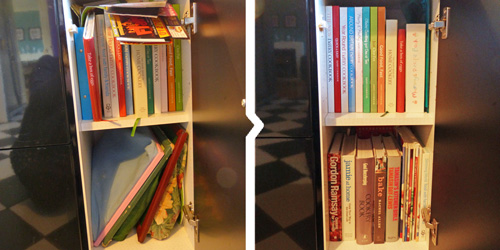
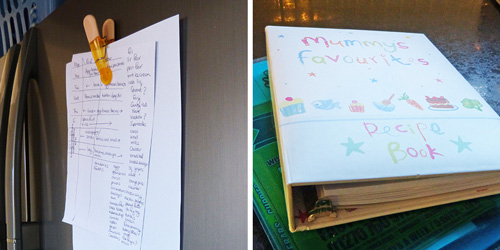
Arrange by colour, type or size and pop into a cupboard or on a shelf. Place any loose recipes inside a file or stick into a book and keep take-away menus in a folder.


Organise-your-fridge-lists

Paperwork

If you end up with post and notes piled up on the work surface, invest a couple of pounds in a letter rack. File away items from it once a week so that it doesn’t overflow and keep a notebook in the front for shopping lists. Stick your weekly meal planner and current shopping list onto the fridge with a magnetic clip. You could also store a list of your favourite meals here for useful reference.


Now, make yourself a cuppa and chill out. You deserve it!

.

.

.

.

.

.


London with Small Children – Top Three Things to Do on a Budget

London with Small Children – Top Three Things to Do on a Budget


London with Small Children


Top Three Things to Do on a Budget


In one of my particularly optimistic (or possibly slightly tipsy) moments I booked a weekend in London with my parents and our three small children.

After realising the gravity of what I had done I did some SERIOUS research in where to go and how to get there – with the minimal amount of stress possible. What transpired was a fabulous (but exhausting) couple of days in the capital brim-full of memories for us and the children.

The research was crucial. For each leg of our journey, using the London Transport website, www.tfl.gov.uk I found the best possible route with minimal changes and steps. I also purchased Oyster cards so that we didn’t have to worry about buying tickets every time.

We stayed in an apartment, which was much better than a hotel room as it meant that the children could stick to their usual bedtime routine – avoiding grumpiness – and we could enjoy a take-away and bottle of wine in the evening.


Here’s what we did:

The Science Museum

This place is fantastic. We loved the space gallery and the play area in the basement – which is specifically designed for under sixes – kept the children entertained for hours. There are wonderful hands-on sensory activities, a huge waterplay (complete with aprons), a bubble show and much more.

Emirates Air Line

Emirates Air Line and the Thames Clipper

What a way to see London! We took the Docklands Light Railway to Victoria and then the cable car across the Thames to the O2, which has a great selection of family-friendly eateries. From there we took the bus to Greenwich for a quick look at the Cutty Sark and then took the boat down the river. It was late afternoon and just turning dusk, so the buildings and bridges looked magical, lit up against the skyline and reflected in the water. Whilst people relaxed inside with their coffees, we sat outside at the back of the boat for the best views (and the most fun!)

Museum of London with Kids

The Museum of London

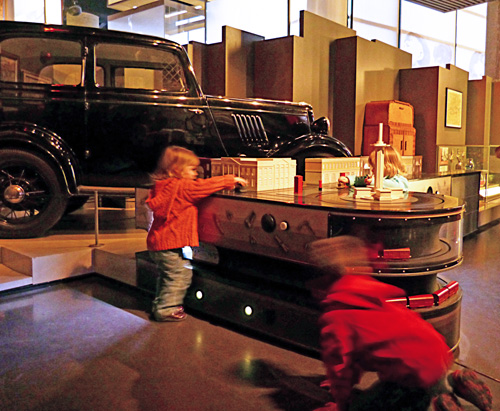
This was my first visit to this excellent museum, which illustrates the history of the city in a way that is accessible to everyone. We all thoroughly enjoyed the exhibits and learnt a great deal – the Victorian street was a particular favourite.

Although we had a brilliant time, we didn’t spend a great deal. I booked the train tickets 11 weeks in advance, and used our friends and family railcard (well worth getting for big savings).

This resulted in tickets for the
seven of us at the price I would
usually pay for myself for one
day in London for work.

The Oyster cards were really useful; giving us discounted travel on every mode of transport we used (including the cable car). I booked the apartment via a discount website and it was an absolute bargain. Being in an apartment also meant that we spent much less on food – we only ate out at lunchtimes. And of course, the two museums we visited were free (though we ate in their cafes and spent pocket money in their shops and so we did our bit to support them.)

A weekend in the big smoke with small people is not a relaxing weekend, but it can be so much fun with a bit of forward planning (and as little luggage as possible!).

Go for it.


.

.

.

.

.


1 33 34 35 67