Tag Archives: Seasonal Garden Ideas

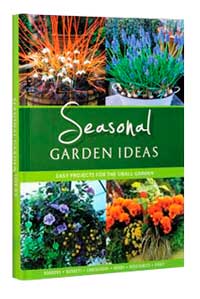
Inspired by the new gardening book, we managed to dodge the rain and get out in the garden this weekend.

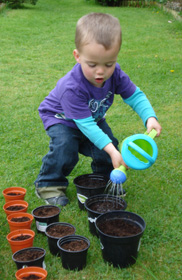
Planting seedsIsaac had lots of fun planting seeds – free from http://www.bbc.co.uk/gardening/digin/ – which we hope will grow into splendid salad leaves, carrots, courgettes, beans and sunflowers. Hmmm, as complete novices, we will see!

Besides the vegetables I want to try and attract more wildlife to the garden. My parents are lucky enough to enjoy the spectacle of two visiting badgers almost every night; it would be wonderful if we could encourage mammals to our garden too. The Wildlife Trust has a teamed up with the RHS to produce a lovely website with lots of handy tips http://www.wildaboutgardens.org/.

Our first project will be this fantastic Hedgehog Hideaway from Seasonal Garden Ideas. Despite its simplicity, this is definitely one for my other half or I might end of with one or two fewer limbs!


Follow us on Twitter! Follow us on Twitter
Follow us on Facebook! Become a fan

Hedgehog Hideaway

Hedgehogs spend the winter months hibernating, curled up asleep in an out-of-the-way corner. They do good work in the garden by eliminating slugs and snails – so repay the debt by providing them with a safe, purpose-built home.

Hedgehog-HouseThis can be made at any time of year, but needs to be ready in early autumn for the hedgehogs to find before they settle for their winter sleep.

Allow a couple of hours, depending on your woodworking skills.

Equipment required

  • For the box: Six pieces of 1cm (½in) thick untreated plywood – two 30cm x 31cm (12in x 12½in) side pieces; three 53cm x 30cm (21in x 12in) pieces for the bottom, back and front and one 56cm x 30cm (22in x 12in) piece for a fixed roof or one 58cm x 33cm (23in x 13in) for a hinged roof.
  • For the tunnel: two 15cm x 30cm (6in x 12in)pieces of untreated plywood for the sides; two 18cm x 30cm (7in x 12in) pieces for the top and bottom.
  • Panel pins, 20cm (8in) length of 2.5cm (1in) diameter right-angled (‘elbow’) plastic piping, wood glue (non-toxic), saw, hammer.
  • Two or three brass hinges and screws (if using).
  • Shredded paper and/or straw to line the box.

1 Make the box first. Cut six pieces of plywood to the dimensions given on page 144. In the back piece cut a central 2.5cm (1in) diameter ventilation hole about three-quarters of the way up from the bottom – this will eventually take the piece of plastic piping.

2 Cut a central hole measuring 18cm (7in)wide by 15cm (6in) high in the bottom of the front piece.

3 Attach the sides to the bottom piece of plywood using glue and panel pins. Next attach the back piece in the same way. Hammer in the panel pins as straight as you can for stability. Attach the front piece in the same way.

4 For the roof you have a choice. If you want to look inside the box from time to time, then attach it to the back piece using two or three brass hinges. If not, then glue and pin the roof to the box sides, back and front.

5 Now make the tunnel. Glue and pin the two sides (the pieces measuring 15cm x 30cm/6in x 12in) to the bottom piece. Then glue and pin the top on.

6 Insert the piece of piping in the ventilation hole, with the outside open end facing down so it doesn’t get filled with leaves and debris or let water in.

7 Put some shredded paper and/or straw into the box so it is warm and snug for the hedgehog, then position it in a sheltered, secluded part of the garden – but not facing north or north-east. If possible, set it against a fence or wall. Insert the tunnel into the entrance hole – and await the arrival of your winter lodger.

Tip
Cover the box with leaves, twigs and branches to give it a more natural look and to help it blend into its surroundings, but take care not to obstruct the entrance or the ventilation hole and pipe.

Notes
Don’t use treated plywood – the stain used may be toxic or harmful to the hedgehogs. Try not to look into the box frequently to see if there is someone inside – a hibernating hedgehog should not be disturbed once it is asleep. Also, the less time you spend near the box, the more likely it is that a hedgehog will feel confident enough to take up residence.

Aftercare
The ventilation hole and pipe enable the hedgehog to breathe while it is in the box, and also help to avoid condensation. If you have used hinges for the top of the box, then place a brick on top to keep it firmly closed. Clean out the box once a year in late summer – after the breeding season is over and before hibernation is due to begin. Put some more clean, fresh paper or straw inside.

Project taken from Seasonal Garden Ideas available now from the Dairy Diary online store.

Follow us on Twitter! Follow us on Twitter
Follow us on Facebook! Become a fan

I’m going to grow my own!

With the launch of our new gardening book – Seasonal Gardening Ideas – I have been totally inspired to ‘grow my own’ this year.

I am not going to try and be too ambitious, as I have never done it before but I am going to start with these fun and quirky Pot Herbs for the Kitchen. They look great and I will have a constant supply of my favourite herbs right next to the kitchen door.

Seasonal Garden Ideas features many more fabulous mini-projects for the whole year and easy enough for anyone to tackle. It’s on sale now just in time for the start of the gardening season

And when the herbs are established try this delicious recipe for Salmon with Minty Salsa taken from Clever Cooking for One or Two.

Win a copy of Clever Cooking for One or Two

Simply enter here before Tuesday 4 May – we have ten to give away. Good luck.

Follow us on Twitter! Follow us on Twitter
Follow us on Facebook! Become a fan

Herbs for the Garden

Fresh herbs give a great lift to many foods – so grow your own in pots sited near the kitchen for ease of picking. And why not choose some colourful, fun containers to plant in?

Sow seeds in March, or buy small herb plants in April or May, pot up at once and start picking leaves as soon as the plants have grown slightly. Plant in a sunny position. The job will take about an hour.

HerbsPlants required
Seed packets or small plants of parsley, thyme, marjoram (oregano), sage, mint and rosemary.

Equipment required
Six small plastic pots for potting up seedlings bought at the garden centre.
Seed tray, modular cell system or jiffy pots for sowing seeds, if using.
Five containers such as the enamel kettles.
Soil-based potting compost and proprietary seed compost if using.
Broken crocks for drainage.
Trowel.

1 Fill the seed tray or modular cell system with seed compost and sow your seeds according to the instructions on the packets, or sow in jiffy pots according to the manufacturer’s instructions. Keep on a kitchen windowsill while the seeds germinate, then move them outside when all danger of frost is past.

2 When the seedlings are large enough to handle, pot them on into the plastic pots using potting compost and lining with broken crocks for drainage.

3 Or, line the plastic pots with broken crocks and fill with potting compost, into which you have mixed some sharp sand (if using). Then plant your garden centre seedlings, place into the containers and set out in an attractive arrangement. In general, allow one herb per container, but if the container is big enough, put several in together – here rosemary, parsley and mint have been put in the central container.

4 Place the young herb plants outside only when all danger of frost is past. If you’re uncertain, place them outside on sunny days and bring them in at night until the weather warms up enough for them to be left outside permanently.

5 Pick and use the leaves regularly. All these herbs can grow quite large and, by the end of summer, may well have outgrown their containers unless you keep them under control.

Notes
Most herbs do best in full sun. They don’t require rich soil, but they must not be allowed to get waterlogged, so good drainage is essential. Rosemary, sage, thyme and marjoram are tough, shrubby plants and can be kept going for years if put into the ground or grown in large enough pots. Mint and parsley are herbaceous and will die down in winter, but reappear again in spring.

Aftercare
Regular picking is needed, and watering with care.

Project taken from Seasonal Garden Ideas

Follow us on Twitter! Follow us on Twitter
Follow us on Facebook! Become a fan

Happy Easter Holidays

I hope you have all had a lovely, relaxing Easter and not eaten too many of those tempting Easter treats!

An extra day off work today – woohoo. The perfect opportunity to show off your gardening talent (or not – it’s so easy my cat could do it!) with the following Pretty in Pink gorgeous spring basket. It takes less than an hour to do and has instant impact.

I love hyacinths and they are just starting to bloom now, so it’s definitely one for today’s to-do list, along with a visit to a nearby National Trust property – for some fun family activities. Visit the National Trust website for details of events near to you.

And for lots more easy garden projects take a look at Seasonal Garden Ideas . Enjoy!

Follow us on Twitter! Follow us on Twitter
Follow us on Facebook! Become a fan

Pretty in Pink

Pretty-in-Pink

.

Pretty in Pink

Make a pretty basket of pink hyacinths special by adding hoops of pussy willow twigs with the soft grey catkins just bursting out – a lovely display that should last for several weeks.

Pussy willow twigs are available in early spring, either in hedgerows or from florists. Pot-grown hyacinths can be found in garden centres from January through to May or even later.

Planting up a basket takes about an hour.

Plants required
Ten to twelve pink Dutch hyacinths just coming into flower.
Six to eight pussy willow twigs each about 45cm (18in) long.

Equipment required
Rustic-weave basket.
Hanging-basket liner (plastic, hessian, felt or moulded paper).
Bulb compost to fill.
Several handfuls of moss to tuck around the base of the hyacinths.
Trowel.

1 Place the liner you have chosen in the bottom of the basket, pricking holes through for drainage if needed. Fill the basket two-thirds full with bulb compost.

2 Carefully remove each hyacinth, one at a time, from their pots and plant in the basket, adding more compost and setting each one to the same depth as it was in its pot. Place them as close together as you can, so the heavy flowerheads will support each other, and firm in well.

3 Tuck moss loosely around the base of the hyacinths to cover the soil completely. Water lightly.

4 Wedge the bottom end of a pussy willow twig into the basket weave then bend it over to form a hoop. Tuck the tip of the twig securely into the basket, then repeat with the other twigs all round the basket, overlapping the twigs slightly as you go.

5 Position your basket in a sunny spot for best display. The furry grey catkins will eventually turn bright yellow as they open.

Tips
Take great care not to knock the pussy willow catkins off the twigs as you handle them – they are quite fragile. If the hyacinth stems start bending over, insert thin bamboo canes into the compost and tie the stems to them as discreetly as possible with soft string. Bring under shelter if heavy rain is threatened.

Note
Reuse your rustic basket for a summer display by planting with nasturtiums or begonias.

Aftercare
By its very nature this is a temporary display. When the hyacinth flowers have withered, stop watering and allow the foliage to turn brown. Then remove the bulbs from the basket, clean them carefully and store in a dry, dark place until autumn, when you can plant them out in the garden. Discard the pussy willow twigs when the catkins have flowered.

Project taken from Seasonal Garden Ideas

Follow us on Twitter! Follow us on Twitter
Follow us on Facebook! Become a fan