Gardening

Make mowing a breeze! How-to-do brick border edging

Brick-Border-Edging

Brick Border Edging

One of the projects that I (when I say I, I actually mean my far more practical other half) want to tackle this summer is the edge between the lawn and the borders. 

Our strimmer seems to run out of strimming
line roughly every two minutes and I end up
on my hands and knees using our blunt garden
shears to hack at the edge of the lawn.

With sunken bricks, you can just mow straight over them and the borders look tidy and stay contained. Overall, this gives a really neat finish to the garden.

For instructions on how to implement this in your garden, visit the updated How to do Brick Border Edging blog on the Dairy Diary website: CLICK HERE FOR BLOG

And for more garden inspiration…

Check out our Ideas for the Garden blogs here. Or visit the Inspire Me page to find blogs about crafts, days out, recipe collections and more!

#gardening

Scented Pots & Win a Garden Centre Voucher

4 Steps to a Gorgeous Scented Pot

Having a supply of fresh home-grown herbs is really useful, and much cheaper than purchasing them from the supermarket.

And in this project, they look (and smell) gorgeous too.

This planted pot would look fabulous stood by the front door and will welcome you home with fragrant aromas.

Bay-Tree

Bay, Thyme and Lavender

Three strongly aromatic plants combine here to make an enticingly scented corner. A standard bay in a large ceramic pot is circled by a medley of low-growing thymes, with lavender surrounding the base.

Plant in spring. All of these plants have a year-long presence – bay and thyme are evergreen, while lavender, which flowers in summer, retains its grey leaves throughout winter.

Allow a couple of hours to complete this container and the surrounding bed.

Plants

  • One bay tree (Laurus nobilis), trained to standard shape and clipped to a ball.
  • Eight thymes (Thymus serpyllum and Thymus citriodorus varieties – here golden leaved, variegated and grey-leaved forms as well as the more usual dark green).
  • Eight lavenders (Lavandula variety, such as ‘Munstead’).

Equipment

  • Large ceramic container (or any other pot large enough to take the bay tree).
  • Soil-based potting compost with added grit or sharp sand for drainage.
  • Broken crocks for drainage.
  • Trowel.

1 Position your pot where it is to stand – it will be too heavy to move once planted. Here the pot is surrounded by a narrow bed of lavender which will need about 45cm (18in) of planting space all around the pot.

2 Line the container with broken crocks for drainage, then half-fill with compost. Check the level of the bay’s rootball by placing it in its original pot on the compost. Adjust the level as necessary to get the rootball to the same depth it was in before, then plant the bay, placing it centrally in the pot. Firm in.

3 Top up the container with more compost – the thymes will have much shallower rootballs than the bay. Plant the thymes in a circle around the bay, firm in, then top up again with more compost to within 2.5cm (1in) of the rim. Water thoroughly.

4 Work some of the compost/grit mix into the soil around the pot, then plant the lavenders all round. Water thoroughly.

Tips

If you wish, choose a dry, sunny day and cut some of the lavender flowers when they are at their peak. Leave them to dry in bunches, then use them in a vase or a potpourri, or make little sachets and stuff them with the lavender flowerheads – place in linen drawers or hang in clothes cupboards to keep the clothes smelling fresh and sweet.

Note

Both the bay and the thymes are culinary herbs, so use them freely in your cooking.

Aftercare

All these plants do best in full sun and need light, well-drained soil. Keep the bay in shape by trimming any straggly shoots in summer; remove any frost-damaged leaves/shoots in spring. Remove faded lavender flowers in autumn, then prune in April – but do not cut into old wood. Clip the thyme, removing dead flowerheads and straggly shoots in spring.

This little project is taken from our Seasonal Garden Ideas book. Find out…

READ MORE


WIN a £50 National Garden Centre Voucher!

If you fancy your chances of winning a £50 National Garden Centre Voucher just click here.

ENTER

Good luck!

Top 8 Colourful Gardens to Visit

Top Gardens to Visit

Colourful Gardens to Visit

The nights and mornings are getting lighter at last and it’s getting a little bit warmer. So now’s the time to think about venturing out, and enjoy what the UK has to offer.

This year’s edition of the Dairy Diary has a feature on colour in our gardens and also includes this list of stunning gardens to visit.

Gardens to Visit

The white garden at Sissinghurst, Kent

Hidcote, in Gloucestershire, famed for its twin red borders

The winter gardens at Dunham Massey, Cheshire

Great Dixter in East Sussex, for unusual colour schemes

Beth Chatto Gardens, Essex, for garden artistry

The herbaceous border at Arley Hall, Cheshire

Harlow Carr, the RHS garden in Yorkshire, pushing the boundaries of design and planting styles

Barnsdale Gardens, Rutland, described as a ‘theme park for gardeners’

Check opening times and facilities before visiting.

I can personally recommend Hidcote, which is just gorgeous, and Dunham Massey, which is at its best at this time of year.

You could forego the expensive afternoon tea on offer and instead take with you a flask and some scrummy melting moments.


Oatie Melting Moments recipe

Oatie Melting Moments

These cute, little, oaty biscuits are melt-in-the-mouth, and the perfect sweet treat alongside a hot drink. These delightful Oatie Melting Moments are from the Dairy Diary. For more delicious recipes visit the Dairy Diary Recipe Collection.

CLICK HERE FOR RECIPE

#gardens

#bakingbiscuits

#nationaltrust

The secrets to year-round colour in your garden

Dairy Diary 2017 gardening feature

The secrets to year-round colour in your garden


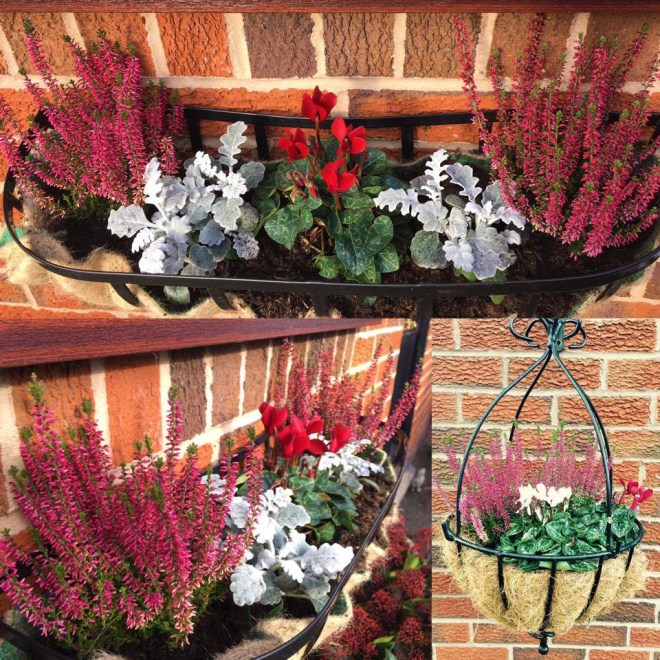
Now the weather has got colder and those summer bedding plants have died down it’s time to do a little creative planting to give your home that va va voom.

There may not be an abundance of bedding plants to choose from at this time of year but you can still add kerb appeal with pots and baskets and a few well-chosen specimens.

2017 A5 diaries

2017 diary, A5 week-to-view with recipesFor a display that will see you through until spring choose a few small heathers in deep red or rust colours, some cyclamen and also a few silvery-coloured plants, such as Senecio Maritima ‘Silver Dust’ (Silver Ragwort).


Underplant with tulip bulbs and these will appear in spring. If the cyclamen fade early you can replace with Christmas roses. I’ve also chosen a gorgeous Skimmia Japonica to place in a pot by the front door.


The 2017 Dairy Diary has a fantastic feature on gardening for year-round colour, with tips on colour schemes and what to plant when for a gorgeous year-round floral display. It even gives a list of glamorous gardens to visit.

2017 A5 diary


Dairy Diary 2017Dairy Diary is available to buy for just £7.99.

Click here for more information, but don’t dilly dally as they’re selling fast.


#gardening

#autumncolour

#kerbappeal


Garden Revamp in 4 Simple Steps

Win £50 Garden Voucher

Fabulous Front Garden Revamp in 4 Simple Steps

Whilst rambling cottage gardens and wildflower meadows have a beautiful carefree charm, I also really love the pattern and uniformity of municipal gardens and even town roundabouts – try to see beauty wherever you can is my motto!

For many modern houses, this regimented type of planting can work really well, particularly in the front garden where space is often limited.

I love this Rainbow Fan idea from our Seasonal Garden Ideas book and plan to try this to cheer up a drab patch of soil underneath one of our windows. Here’s how to create it:


RAINBOW FAN

For instructions on how to plant this Colourful Rainbow Fan in your garden, see the updated Colourful Rainbow Fan Garden Idea blog here.

READ MORE

For more gardening inspiration, tips and tricks, visit our Ideas for the Garden blogs in the Inspire Me section of the Dairy Diary website.

#easygardenidea

#win

#competition

4 Steps to a Fabulous Fragrant Pot

Bay-Tree

At the moment, I have a rather sad looking pot of mint by the sink. It needs a proper place to live as it’s bedraggled and neglected. 

I absolutely love the scent of herbs and would love to create somewhere special for them to grow and be nurtured so that we can use them in salads and stews and enjoy the aroma.

After browsing through our Seasonal Garden Ideas book I have decided to do this project (adding in my little pot of mint). It will look fabulous by the front door, will create a wonderful aroma as we pass into the house and give me an easily accessible supply of delicious herbs. I can’t wait to get started!

Bay, Thyme & Lavender

Three strongly aromatic plants combine here to make an enticingly scented corner. A  standard bay in a large ceramic pot is circled by a medley of low-growing thymes, with lavender surrounding the base.

Plant in spring.
All of these plants have a year-long presence – bay and thyme are evergreen, while lavender, which flowers in summer, retains its grey leaves throughout winter.

Allow a couple of hours to complete this container and the surrounding bed.


What you need

Plants

  • One bay tree (Laurus nobilis), trained to standard shape and clipped to a ball.
  • Eight thymes (Thymus serpyllum and Thymus citriodorus varieties – here golden leaved, variegated and grey-leaved forms as well as the more usual dark green).
  • Eight lavenders (Lavandula variety, such as ‘Munstead’).

Equipment

  • Large ceramic container (or any other pot large enough to take the bay tree).
  • Soil-based potting compost with added grit or sharp sand for drainage.
  • Broken crocks for drainage.
  • Trowel.

Instructions

  1. Position your pot where it is to stand – it will be too heavy to move once planted. Here the pot is surrounded by a narrow bed of lavender which will need about 45cm (18in) of planting space all around the pot.
  2. Line the container with broken crocks for drainage, then half-fill with compost. Check the level of the bay’s rootball by placing it in its original pot on the compost. Adjust the level as necessary to get the rootball to the same depth it was in before, then plant the bay, placing it centrally in the pot. Firm in.
  3. Top up the container with more compost – the thymes will have much shallower rootballs than the bay. Plant the thymes in a circle around the bay, firm in, then top up again with more compost to within 2.5cm (1in) of the rim. Water thoroughly.
  4. Work some of the compost/grit mix into the soil around the pot, then plant the lavenders all round. Water thoroughly.

Tips
If you wish, choose a dry, sunny day and cut some of the lavender flowers when they are at their peak. Leave them to dry in bunches, then use them in a vase or a potpourri, or make little sachets and stuff them with the lavender flowerheads – place in linen drawers or hang in clothes cupboards to keep the clothes smelling fresh and sweet.

Note
Both the bay and the thymes are culinary herbs, so use them freely in your cooking.

Aftercare
All these plants do best in full sun and need light, well-drained soil. Keep the bay in shape by trimming any straggly shoots in summer; remove any frost-damaged leaves/shoots in spring. Remove faded lavender flowers in autumn, then prune in April – but do not cut into old wood. Clip the thyme, removing dead flowerheads and straggly shoots in spring.


Seasonal Garden Ideas £3.99Seasonal Garden Ideas
is available for just £3.99!

A perfect gift for your
green-fingered friends.

#gardening

#easypots

#growourownherbs