Author Archives for Emily Davenport, Head of Dairy Diary

About Emily Davenport, Head of Dairy Diary

Head of Dairy Diary; I'm passionate about producing high quality products that our customers will cherish. I'm also a mum of three and I enjoy cooking, walking, gardening and painting with my family, as well as printmaking (when I find the time!)

Spring Bank Holidays

I’ve been caught by surprise by this bank holiday – and what a nice surprise! It has come round so quickly after the Easter long weekend.

A couple of weeks’ ago I had a phone call from one of our consumers asking for us to “give the late May bank holiday its proper name – Whitsun.” As we chatted it made me realise how little many of us (including me) know about the origins of our bank holidays. And so for some research….

The name ‘bank holiday’, quite simply comes from the time when the banks were closed and so no trading could take place. Back in the early 19th century, The Bank of England would observe 33 saints’ days and religious dates as holidays. These were drastically reduced with the official introduction of  the bank holiday in 1871.There were four holidays for England, Wales and Northern Ireland and five for Scotland. Whitsun commemorated one of the three baptismal seasons – baptism candidates would wear ‘white’ on a ‘Sunday’ and would be celebrated the day after Pentecost. Though Whitsun was included in the original bank holiday dates it was later replaced by the spring holiday on the last Monday in May. Further bank holidays were added during the 1970s, with a total of seven for Scotland, eight for England and Wales and ten for Northern Ireland. Let’s hope the 2010s sees the introduction of some more!

It’s asparagus season!
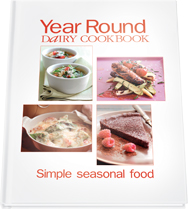
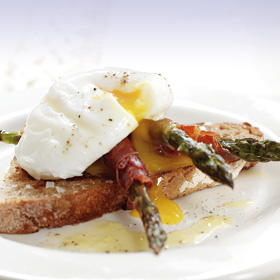
Year Round Dairy CookbookThe season English asparaus is short, so make the most of it and treat your family to this gorgeous seasonal recipe, Asparagus with Poached Eggs from Year Round Dairy Cookbook. And don’t forget the book is on special offer – last chance – at only £2.99. Bargain!

Follow us on Twitter! Follow us on Twitter
Follow us on Facebook! Become a fan

Asparagus with poached eggs

The English asparagus season only lasts a couple of months, so make the most of this delicacy by serving in different ways, such as with ham and eggs. Roasting asparagus gives a stronger, brighter taste than steaming or boiling.

For more flavour, rub the bread with a cut clove of garlic or add garlic slivers to the roasting asparagus.

Asparagus and Eggs10 minutes preparation time
15 minutes cooking time
354 Kcal per portion
21.8g fat per portion of which
4.6g is saturated
4 servings

Asparagus spears 12, washed
Olive oil 4 tbsp
Rustic bread or ciabatta 4 large or 8 small slices
Parma or Serrano ham 6 slices, cut in half widthways
Wine or cider vinegar a dash
Eggs 4 large free-range
Salt and freshly ground black pepper

1 Preheat the oven to 200°C/400°F/Gas 6. Break the ends off the asparagus stalks where they naturally snap. Put the asparagus on a baking sheet, drizzle with 1 tbsp of the oil and rub it over the spears with your hands. Bake for 5 minutes.

2 Meanwhile, drizzle the rest of the oil over the slices of bread. When cooked, take the asparagus out of the oven and wrap half a piece of Parma ham around each stalk and put back on the baking sheet. Place the bread alongside. Bake for 10 minutes until the ham starts to go crispy, but do not overcook.

3 While the asparagus and bread are baking, bring a wide saucepan of water to the boil and add a dash of vinegar. Break in the eggs one at a time and let them poach over a gentle heat for 3–4 minutes, depending on how you like them.

4 Arrange the baked bread and roasted asparagus on four plates. Then carefully remove the poached eggs from the saucepan with a draining spoon and place on top. Sprinkle with salt and pepper.

Cook’s tips
• Adding vinegar to the egg poaching water helps the eggs to coagulate more quickly – white, cider or rice is preferable to malt vinegar.
• Wrap the asparagus in Serrano ham, which is easier to handle than Parma ham. Bacon tends to unwrap itself and is too fatty.

Recipe taken from Year Round Round Dairy Cookbook.

Follow us on Twitter! Follow us on Twitter
Follow us on Facebook! Become a fan

I’m going to grow my own!

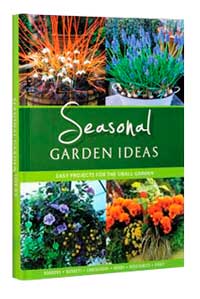
With the launch of our new gardening book – Seasonal Gardening Ideas – I have been totally inspired to ‘grow my own’ this year.

I am not going to try and be too ambitious, as I have never done it before but I am going to start with these fun and quirky Pot Herbs for the Kitchen. They look great and I will have a constant supply of my favourite herbs right next to the kitchen door.

Seasonal Garden Ideas features many more fabulous mini-projects for the whole year and easy enough for anyone to tackle. It’s on sale now just in time for the start of the gardening season

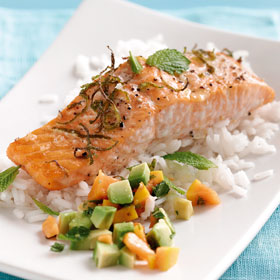
And when the herbs are established try this delicious recipe for Salmon with Minty Salsa taken from Clever Cooking for One or Two.

Win a copy of Clever Cooking for One or Two

Simply enter here before Tuesday 4 May – we have ten to give away. Good luck.

Follow us on Twitter! Follow us on Twitter
Follow us on Facebook! Become a fan

Herbs for the Garden

Fresh herbs give a great lift to many foods – so grow your own in pots sited near the kitchen for ease of picking. And why not choose some colourful, fun containers to plant in?

Sow seeds in March, or buy small herb plants in April or May, pot up at once and start picking leaves as soon as the plants have grown slightly. Plant in a sunny position. The job will take about an hour.

HerbsPlants required
Seed packets or small plants of parsley, thyme, marjoram (oregano), sage, mint and rosemary.

Equipment required
Six small plastic pots for potting up seedlings bought at the garden centre.
Seed tray, modular cell system or jiffy pots for sowing seeds, if using.
Five containers such as the enamel kettles.
Soil-based potting compost and proprietary seed compost if using.
Broken crocks for drainage.
Trowel.

1 Fill the seed tray or modular cell system with seed compost and sow your seeds according to the instructions on the packets, or sow in jiffy pots according to the manufacturer’s instructions. Keep on a kitchen windowsill while the seeds germinate, then move them outside when all danger of frost is past.

2 When the seedlings are large enough to handle, pot them on into the plastic pots using potting compost and lining with broken crocks for drainage.

3 Or, line the plastic pots with broken crocks and fill with potting compost, into which you have mixed some sharp sand (if using). Then plant your garden centre seedlings, place into the containers and set out in an attractive arrangement. In general, allow one herb per container, but if the container is big enough, put several in together – here rosemary, parsley and mint have been put in the central container.

4 Place the young herb plants outside only when all danger of frost is past. If you’re uncertain, place them outside on sunny days and bring them in at night until the weather warms up enough for them to be left outside permanently.

5 Pick and use the leaves regularly. All these herbs can grow quite large and, by the end of summer, may well have outgrown their containers unless you keep them under control.

Notes
Most herbs do best in full sun. They don’t require rich soil, but they must not be allowed to get waterlogged, so good drainage is essential. Rosemary, sage, thyme and marjoram are tough, shrubby plants and can be kept going for years if put into the ground or grown in large enough pots. Mint and parsley are herbaceous and will die down in winter, but reappear again in spring.

Aftercare
Regular picking is needed, and watering with care.

Project taken from Seasonal Garden Ideas

Follow us on Twitter! Follow us on Twitter
Follow us on Facebook! Become a fan

Salmon with Minty Salsa

Preparation time 10 minutes
Cooking time 15 minutes
Calories per portion 596 Kcal
Fat per portion 45g
of which saturated 10g
Serves 2

Salmon fillets 2 (approximately 150g (5oz) each), skinned
Lime ½ , grated zest and juice
Butter 15g (½ oz)
Salt and freshly ground black pepper
Cooked rice to serve, optional

For the salsa
Olive oil 2 tbsp
Lime ½ , grated zest and juice
Papaya ½ –1 small, peeled, deseeded and chopped
Avocado 1, stoned, peeled and chopped
Chopped mint 2 tbsp

1 Preheat the oven to 200°C/400°F/Gas 6. To prepare the salmon, brush the lime juice over the fish. Place a knob of butter on each fillet and scatter with the lime zest and season with salt and pepper.

2 Place the fish on a buttered baking sheet and bake in the centre of the oven for 12–15 minutes, or until it is just starting to turn golden in colour.

3 To make the salsa, tip the olive oil, lime zest and juice into a bowl and add the papaya, avocado and mint. Mix well. Season to taste.

4 Serve the fish on a bed of rice. with the salsa spooned on to the plate.

Cook’s tip
If the papaya is large, then only use half of it. Keep the other half wrapped in a plastic bag in the fridge for up to 2 days.

Shopper’s tip
Make sure the avocado and papaya are ripe to get the best flavours. Buy the fruits a few days early and allow them to ripen.

This scrummy summery recipe is taken from Clever Cooking for One or Two.

Follow us on Twitter! Follow us on Twitter
Follow us on Facebook! Become a fan

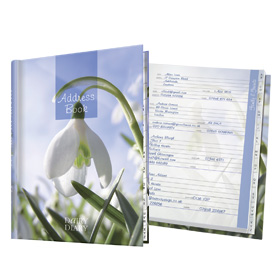
Win A Dairy Diary Address Book

And now for a little treat……win a Dairy Diary address book.

We have ten up for grabs, so just enter your details at http://www.dairydiary.co.uk/mailinglist.html before Monday 26th April and you could win! Easy!