News

10 ways to help honeybees

10 ways to help honeybees

This week is National Honey Week. And what a wonderful thing honey is.

Sweet and sticky and delicious; evocative of childhood days spent reading Winnie the Pooh!

It’s so comforting, spread onto freshly made buttered toast. Mmmm.

We have all heard in the media that honeybees are under threat. According to Dr I Davis, President of the Beekeepers’ Association (reported in the Guardian) there are ways we can help:

10 ways to help honeybees

1. Become a beekeeper
Beekeeping is a most enjoyable, fascinating and interesting hobby – and you get to eat your own honey too. Every year local beekeeping associations run courses to help new people to take up beekeeping and even help them find the equipment they need and a colony of bees. Training programmes continue to allow enthusiasts to become Master Beekeepers. For information on courses visit the British Beekeepers’ Association (BBKA) website

2. Help to protect swarms
Swarming is a natural process when colonies of honeybees can increase their numbers. If you see a swarm contact the local authority or the police who will contact a local beekeeper who will collect the swarm and take it away. Honeybees in a swarm are usually very gentle and present very little danger. They can be made aggressive if disturbed or sprayed with water. Just leave them alone and wait for a competent beekeeper to arrive.

3. Plant your garden with bee friendly plants
In areas of the country where there are few agricultural crops, honeybees rely upon garden flowers to ensure they have a diverse diet and to provide nectar and pollen. Encourage honeybees to visit your garden by planting single flowering plants and vegetables. Go for all the allium family, all the mints, all beans except French beans and flowering herbs. Bees like daisy-shaped flowers – asters and sunflowers, also tall plants like hollyhocks, larkspur and foxgloves. Bees need a lot of pollen and trees are a good source of food. Willows and lime trees are exceptionally good. the BBKA has leaflets on bee friendly trees and shrubs.

4. Buy local honey
Local honey will be prepared by local beekeepers. This keeps food miles down and helps the beekeeper to cover the costs of beekeeping. Local honey complies with all food standards requirements but is not mistreated to give it a long shelf life. It tastes quite different to foreign supermarket honey and has a flavour that reflects local flora.

5. Ask your MP to improve research into honey bee health
Beekeepers are very worried that we do not have enough information to combat the diseases that affect honeybees. Pollination by honeybees contributes £165m annually to the agricultural economy. Yet the government only spends £200,000 annually on honeybee research. Beekeepers have costed a five-year, £8m programme to secure the information to save our bees during which time pollination will contribute more than £800m to the government coffers. Even the Defra minister, Lord Rooker, who holds the purse strings to finance this, has said that without this extra research we could lose our honeybees within ten years. Write to MPs in support of the bee health research funding campaign.

6. Find space for a beehive in your garden
Many would-be beekeepers, especially in urban areas, find it difficult to find a safe space for their colony of bees. If you have some space contact your local beekeeping association and they could find a beekeeper in need of a site. It is amazing what a difference a beehive will make to your garden. Crops of peas and beans will be better, fruit trees will crop well with fruit that is not deformed and your garden will be buzzing!

7. Remove jars of foreign honey from outside the back door
Believe it or not but honey brought in from overseas contains bacteria and spores that are very harmful to honeybees. If you leave a honey jar outside it encourages honeybees to feed on the remaining honey. There is a good possibility that this will infect the bee and in turn the bee will infect the rest of the colony resulting in death of the colony. Always wash out honey jars and dispose of them carefully.

8. Encourage local authorities to use bee friendly plants in public spaces
Some of the country’s best gardens and open spaces are managed by local authorities. Recently these authorities have recognised the value of planning gardens, roundabouts and other areas with flowers that attract bees. Encourage your authority to improve the area you live in by adventurous planting schemes. These can often be maintained by local residents if the authority feels they do not have sufficient resources.

9. Learn more about this fascinating insect
Beekeeping is fascinating. Honeybees have been on this earth for about 25 million years and are ideally adapted to their natural environment. Without honeybees the environment would be dramatically diminished. Invite a beekeeper to come and talk to any local group you support and give an illustrated talk about the honeybee and the products of the hive. They might bring a few jars of honey too Honeybees are a part of our folklore and are one of only two insect species that are managed to provide us with essential services.

10. Bee friendly
When kept properly, bees are good neighbours, and only sting when provoked. Beekeepers wear protective clothing when they are handling bees. If a bee hovers inquiringly in front of you when unprotected, do not flap your hands. Stay calm and move slowly away, best into the shade of shed or a tree. The bee will soon lose interest. It is worth remembering that bees do not like the smell of alcohol on people, the “animal” smell of leather clothing, even watchstraps. Bees regard dark clothing as a threat – it could be a bear! Bees are sometimes confused by scented soaps, shampoos and perfumes, best avoided near the hive.

Try this delicious recipe and find more honey recipes on the Dairy Diary website.

Honey BlancmangeHoney Blancmange

Honey can be used in many different ways in cooking. Such as in this childhood favourite that is sure to be a favourite with adults too. Recipe from The Dairy Book of Home Cookery.

CLICK HERE FOR RECIPE

Follow us on Twitter! Follow us on Twitter
Follow us on Facebook! Become a fan

Mum’s Essential Tips

I have been browsing through one of our household tips books, researching features for the 2014 Dairy Diary and it got me thinking about the tips my mum has passed on to me.

It’s quite incredible how technology has advanced in the last 30 years or so and, as a consequence, the way we look after our homes has changed dramatically.

I think we have lost some
valuable skills and knowledge
through the generations.

There is some very simple advice Mum has passed on, such as, leaving the covers back each morning to air the bed and putting a pudding in the oven whilst the roast is cooking (to make the most of the energy used). We always used to have a good old-fashioned rice pudding or egg custard after our Sunday roast.

It’s about time I revived this tradition I think, especially in an age when being ‘green’ is so important. I even remember her using something called Economy Seven, where she would put the washing machine on during the night when electricity was cheaper. Does anyone else remember this?

Mum isn’t a keen cook, but she always baked with me as a child as she knew how much I loved it.

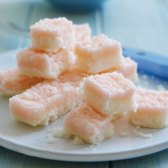
Most vividly, I remember making sweets, such as peppermint creams and coconut ice.

We used to give them as gifts. Such fond memories, thanks Mum!

In homage to those halcyon days, I am going to do my best to persuade my train loving, baking-reluctant little boy to make some of these cute little sweets with me at the weekend.

Coconut Ice recipeThis Coconut Ice recipe is taken from The Dairy Book of Home Cookery, a family heirloom in its own right! Many sons and daughters have been given one by their mum upon leaving home. Still full of those crucial basics we all love, with the addition of some new classics, the 2012 edition is available to buy online at the Dairy Diary website.

Follow us on Twitter! Follow us on Twitter
Follow us on Facebook! Become a fan

Behind the scenes of the Dairy Diary – meet the team

Once a month, I will give you a behind the scenes look at the Dairy Diary and meet the team.

We are a small group but each one of us very different…..this month Graham, our marketing and design guru.

What is your role within Dairy Diary?
I help Nick and Emily with the Dairy Diary and Dairy Cookbook marketing strategies, and design marketing materials such as leaflets, adverts and the website. In addition, I have designed the last five Dairy Cookbooks.

What’s the best thing about working on Dairy Diary?
It’s a privilege to work on a product that has such a long heritage and is loved by so many people.

What’s the worst thing about working on Dairy Diary?
Working with food images means that it is very difficult to forget about eating. And I snack far too much! (Note to self: lock fridge door)

Tell us something we don’t know about you
I have fallen in love with live music again and will be found at The Cambridge Rock Festival in August, camping for all four days and enjoying the fabulous rock music, great food (Tibetan, Caribbean, veggie, etc) and 70 real ales!

What are your favourite things in life?
Other than my wife, kids and new puppy? Well, I love the mountains; rock climbing, walking, skiing… anything which gets me into the mountains. The more remote the better.

What is your favourite Dairy Diary or Dairy Cookbook recipe?
It has to be Ginger and Banana Sponge Pudding with Hot Toffee Sauce and served with real custard. It is so, so good; everything a pudding should be and then some.

Ginger and Banana Sponge Pudding
with Hot Toffee Sauce

If you ever need a recipe that is the
definition of comfort food – this is it!
Let it gently steam away while you
enjoy the wonderful aromas.

Recipe taken from The New Dairy Cookbook

Follow us on Twitter! Follow us on Twitter
Follow us on Facebook! Become a fan

Celebrate National Bread Week

Celebrate National Bread Week

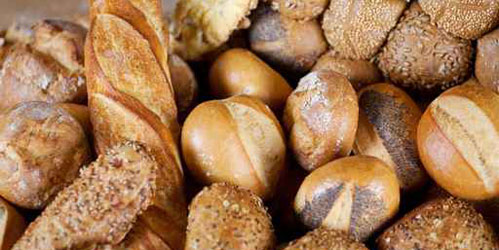
Celebrate National Bread Week by baking your own bread – it’s easier than you think.

Bread has long been a principal form of food. The British museum has loaves which were baked in Egypt over 5000 years ago!

The first bakers guilds were formed in ancient Rome and baking became a respected profession with about 300 bakers in the city at the time of Christ. The Romans took baking with them as they built their empire.

In the middle ages most landlords had a bakery which was a public oven.

Bread became such an important staple in our diet that in 1202 King John introduced the first laws governing the price of bread.

Today in the UK we can purchase over 200 varieties of bread; but baking your bread is very satisfying and the smell of freshly baked bread is fantastic.

Soda Bread Pizza recipe

Try this Soda Bread Pizza recipe, it’s great for easy
weekend baking and the kids will love making it too.

Recipe taken from Year Round Dairy Cookbook

Follow us on Twitter! Follow us on Twitter
Follow us on Facebook! Become a fan

Asparagus is early due to March sunshine

Early asparagus

The British love affair with asparagus dates back hundreds of years, and it is also said to be a powerful aphrodisiac.

In 19th-century France, bridegrooms were served three courses of the spears at their prenuptial dinner.

Asparagus ‘stirs up lust in man and woman’, 
wrote English herbalist Nicholas Culpepper 
in the 17th century.

Asparagus is a good source of potassium, fibre, vitamin B6, vitamins A and C, thiamin and folic acid. The latter is said to boost histamine production which has an aphrodisiac effect on both men and women.

Asparagus is a member of the lily family. Under ideal conditions, it can grow an astonishing 10 inches in a 24 hour period.

The Romans brought it to England and by the 16th century all the royal courts were mad for it. By the 17th century, asparagus was being grown commercially and one of the main areas it was grown in was Battersea in London. They called it Battersea Bundles!

Try these two asparagus recipes this week:

Asparagus Risotto, a Dairy Diary recipeAsparagus Risotto
Recipe taken from Dairy Diary.


Asparagus and Eggs

Asparagus withPoached Eggs

Recipe taken from Year Round Round Dairy Cookbook.


Follow us on Twitter! Follow us on Twitter
Follow us on Facebook! Become a fan

Days out for free

Free days out this Easter

DAYS OUT FOR FREE!

Enjoy the long Easter weekend and take advantage of the huge choice of days out that won’t cost a penny.

It’s Easter this weekend and many of us will be enjoying a couple of extra days off. What will you get up to?

I would like my Easter to be a
mixture of baking, days out,
crafting and relaxing (no chance!)

As a mum of three, I am on a strict budget and cheap days out are a must.

Here is the Dairy Diary’s essential guide to days out for free:

Scotland

McManus Galleries Albert Square, Dundee, Angus
www.mamanus.co.uk
Dundee’s main art gallery and museum, is a remarkable Gothic building where art, history and the environment combine to offer a fascinating glimpse into Dundee’s colourful past.

National Gallery of Scotland The Mound, Edinburgh, Midlothian
www.natgalscot.ac.uk
The gallery exhibits an outstanding collection of art by the greatest artists from the renaissance to post-impressionism.

Scottish National Gallery of Modern Art 75 Belford Road, Edinburgh, Midlothian
www.natgalscot.ac.uk
A fine collection of prints, paintings and sculpture from the 20th and 21st centuries.

Kylerhea Otter Haven Strathoich, Fort Augustus, Inverness
www.forestry.gov.uk
A hide perched above the shore of Kyle Rhea, offering the opportunity to watch local otters and other coastal wildlife.


North England

Durham Cathedral The College, Durham, County Durham
www.durhamcathedral.co.uk
A remarkable example of Norman architecture, the present cathedral dates back to the 12th century.

Whinlatter Forest Park Braithwaite, Keswick, Cumbria
www.forestry.gov.uk/whinlatterforestpark
The only mountain forest in England.  In addition to the stunning scenery there is also an adventure playground, visitor centre and shop.

Lake District Visitor Centre at Brockhole Windermere, Cumbria
www.brockhole.co.uk
Set on the shore of lake Windermere, the centre boasts interactive exhibitions, trails, film auditorium and adventure playground.

Home of Rest for Old Horses Bulrhenny, Richmond Hill, Douglas, Isle of Man
www.iom-horseshome.com
A wonderful retirement home for horses, with museum, café and shop.

Imperial War Museum North The Quays, Trafford, Wharf Road, Trafford Park, Manchester
www.iwm.org.uk
Constructed in 2002, this museum is a real interactive experience with a huge audio visual presentation and thousands of objects from conflicts from the 20th and 21st century.  Not to be missed.

The Albert Dock Liverpool, Merseyside
www.albertdock.com
A variety of shops and restaurants on the river Mersey.  The Tate Liverpool and Beatles Story (charges apply) are well worth a visit.

Otterburn Mill Otterburn, Northumberland
www.otterburnmill.co.uk
Mill museum and shop, nursery, tea garden and coffee shop.

Baltic the Centre for Contemporary Art South Shore Road, Gateshead, Tyne & Wear
www.balticmill.com
Housed in an imposing building, a former grain warehouse, this is one of the largest centres for contemporary art in Europe.

Henry Moore Institute 74 The Headrow, Leeds, Yorkshire
www.henry-moore-fdn.co.uk
The Henry Moore Institute is a centre dedicated to sculpture. Based in the heart of Leeds, the Institute comprises three integrated elements: exhibitions, research and collections.

National Museum of Photography, Film and Television Little Horton Lane, Bradford, Yorkshire
www.nmpft.org.uk
The Museum’s renowned collection includes more than three million items of historical, social and cultural value. These include three key ‘firsts’: the world’s first negative, the earliest television footage and what is regarded as the world’s first example of moving pictures.


Central England

Kettle’s Yard Castle Street, Cambridge, Cambridgeshire
www.kettlesyard.co.uk
Founded by H.S Jim Ede, former curator of the Tate in London as a ‘refuge of peace and order, of the visual arts and of music’.

Gloucester Cathedral 2 College Green, Gloucester, Gloucestershire
www.gloucestercathedral.org.uk
Constructed in 1089, by order of William the Conqueror, this impressive building has wonderful stained glass windows and architecture to be admired.

Old Dairy Farm Craft Centre Upper Stowe, Nr Weedon, Northamptonshire
www.old-dairy-farm-centre.co.uk
A rural shopping experience with unusual gifts, antiques, delicatessen and restaurant.

Rufford Abbey and Country Park Ollerton, Newark, Nottinghamshire
www.ruffordcraftcentre.org.uk
Gallery, craft shops and ceramics centre, set in picturesque parklands.

Sherwood Pines Forest Park Edwinstowe, Mansfield, Nottinghamshire
www.forestry.gov.uk/sherwoodpines
Over 450 acres of ancient woodland, with exhibitions, shops and restaurant.

The Potteries Museum and Art Gallery Betheseda Street, Stoke-on-Trent, Staffordshire
www.stokemuseums.org.uk/pmag
Home of the world’s finest collection of Staffordshire ceramics, there are also art exhibitions, and displays of costume, industry and transport, reflecting the lives of the local people.

Coventry Transport Museum Millennium Place, Hales Street, Coventry, Warwickshire
www.transport-museum.com
Displaying the largest collection of British road transport in the world, this museum tells the story of the history of transport.

Birmingham Museum and Art Gallery Chamberlain Square, Birmingham, B3 3DH
www.bmag.org.uk/birmingham-museum
First opened in 1885, it is housed in a Grade II listed city centre landmark building. There are over 40 galleries to explore that display art, applied art, social history, archaeology and ethnography.

Ashmolean Museum of Art and Archaeology Beaumont Street, Oxford, Oxfordshire
www.ashmol.ox.ac.uk
Britain’s oldest public museum, displaying famous collections of art and artefacts from across the world.


South England

Bucks County Museum Church Street, Aylesbury, Buckinghamshire
www.buckscc.gov.uk/museum
An award winning museum charting the heritage of Buckinghamshire.  With an art gallery and Roald Dahl children’s gallery (charges apply).

Milton Keynes Gallery Midsummer Boulevard, Milton Keynes, Buckinghamshire
www.mk-g.org
Striking building housing exhibitions of contemporary art.

Falmouth Art Gallery The Moor, Falmouth, Cornwall
www.falmouthartgallery.com
One of the leading art collections in Cornwall and features work by old masters, major Victorian artists, British Impressionists, leading maritime artists and contemporary painters and printmakers.

Walford Mill Craft Centre Stone Lane, Wimborne, Dorset
www.walfordmillcrafts.co.uk
This centre showcases the best in contemporary craft and design.  There is a wide range of pottery, textiles, jewellery, wood and metalwork.

Tolpuddle Martyers Museumn TUC Memorial Cottages, Tolpuddle, Dorchester, Dorset
www.tolpuddlemartyrs.org.uk
Charting the famous local story of the farm labourers who were arrested and departed to Australia after forming a trade union in 1834.

Chelmsford Museum and Essex Regiment Museum Oaklands Park, Moulsham Street, Chelmsford, Essex
www.chelmsford.gov.uk
Documenting local and social history, with decorative arts, natural history, and mitilaria.

Royal Hampshire Regiment Museum and Memorial Garden Serle’s House, Southgate Street, Winchester, Hampshire
www.serleshouse.co.uk
Historical artefacts from the history of the Hampshire regiment are on display in this fine Georgian House.

Maidstone Museum and Bentlif Art Gallery St. Faith’s Street, Maidstone, Kent
www.museum.maidstone.gov.uk
Exhibiting costumes, life size dinosaurs, fossils and even an Egyptian mummy, in an impressive Elizabethan Manor House.

Brighton Museum and Art Gallery Royal Pavilion Gardens, Brighton, Sussex
www.brighton-hove-rpml.org.uk/Museums
Re-opened in 2002, this new look museum offers state of the art facilities, fashion, paintings and ceramics.

There are over 50 free museums, galleries and other places to visit in London.  Here is just a small selection.

Freightliners Farm Sheringham Road, Islington, London
www.freightlinersfarm.org.uk
Working city farm, in the centre of Islington.

British Museum Great Russell Street, London
www.thebritishmuseum.org
Founded in 1753 this is the world’s oldest museum. With 2½ miles of galleries.

National Portrait Gallery St Martin’s Place, London
www.npg.org.uk
The largest collection of portraiture in the world.

Tate Britain/ Tate Modern Millbank / Bankside, London
www.tate.org.uk
Some of the best British and contemporary art in the world.

Victoria and Albert Museum Cromwell Road, South Kensington, London
www.vam.ac.uk
An enormous and diverse collection of decorative arts.


Wales

National Museum and Gallery Cardiff Cathays Park, Cardiff
www.nmgw.ac.uk
Journey back in time to discover dinosaurs and woolly mammoths, the secrets of Celtic, Viking and Roman ancestors and Welsh natural history.

National Woollen Museum Dre-Fach Felindre, Llandysul, Carmarthenshire
www.nmgw.ac.uk
Families can have fun following the specially designed trail, ‘A Woolly Tale’, trying their hand at carding, spinning and sewing along the way.

Welsh Slate Museum Llanberis, Gwynedd
www.nmgw.ac.uk
The museum building is sited in the Victorian workshops built in the shadow of Elidir mountain.  Not so much a museum as a pocket of history, showing the relics of the slate industry.

Dylan Thomas Centre Somerset Place, Swansea
www.swansea.gov.uk/dtc
A splendid building which houses a permanent exhibition in celebration of the life and works of Dylan Thomas.

Big Pit National Mining Museum of Wales Blaenafon, Torfaen,
www.nmgw.ac.uk
Discover what life was like as a miner, go 300ft underground, view the exhibitions and multi-media tour.


Northern Ireland

Ballydougan Pottery Bloomvale House, 171 Plantation Road, Portadown, Craigavan, Co Armagh
www.ballydouganpottery.co.uk
This historic thatched house has seen generations of local craftspeople, dating back to 1785.

Armagh County Museum The Mall, East Armagh, Co Armagh
www.nmni.com
An impressive collection of paintings and artefacts reflecting the lives of the local people.

Ulster Museum Botanic Gardens, Belfast
www.nmni.com
As Northern Ireland’s treasure house of the past and present, the museum is home to a rich collection of art, history and natural sciences.


Make a little time to bake something special this Easter

Of course, no Easter is complete without
Simnel cake. Happy Easter everyone!

Simnel Cake  

1 46 47 48 67