Baking

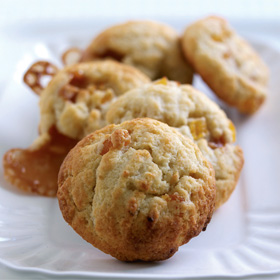
Apricot cookies recipe

These delicious cookies are perfect for summer picnics

Apricot Cookies recipeMakes 36 cookies
Time 30 mins
Calories 115 per cookie
Fat 8g of which 4.3g is saturated
Suitable for freezing
Suitable for vegetarians

Butter 175g (6oz)
Caster sugar 110g (4oz)
Soft cheese 175g (6oz)
Self-raising flour 225g (8oz)
Ground almonds 75g (3oz)
Ready-to-eat dried apricots 75g (3oz), chopped
Fudge pieces 75g (3oz), chopped if necessary

1 Preheat oven to 200°C/400°F/Gas 6. Line baking sheets with non-stick baking paper.

2 Put butter, sugar, cheese, fl our and almonds into a bowl and beat together. Stir in apricots and fudge.

3 Drop spoonfuls of mixture onto baking sheets and press down lightly with a fork.

4 Bake for 10 minutes. Leave for 2 minutes on baking sheets, then lift off and cool on a wire rack.

A Dairy Diary recipe

Follow us on Twitter! Follow us on Twitter

Follow us on Facebook! Become a fan

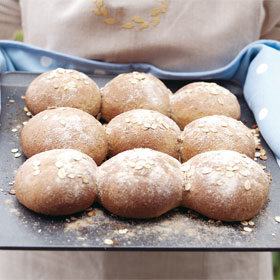
Traditional homemade bread

A proven recipe for both white and wholemeal bread rolls

Traditional homemade bread recipePreparation time – 10 minutes plus soaking and proving time
Cooking time – 15 minutes
Calories per roll – 144 Kcal
Fat per roll – 3g of which saturated – 1.6g
Makes – 18 rolls
Suitable for vegetarians
Suitable for freezing

Wholemeal bread
Warm water 450ml (16fl oz)
Caster sugar 4 tsp
Traditional dried active yeast 1 tbsp
Wholemeal flour 680g (11⁄2lb), plus a little extra for sifting
Salt 2 tsp
Butter 50g (2oz)
Milk 300ml (1⁄2 pint), warm
Egg 1 large beaten with 2 tbsp milk
Oats for sifting, optional

White bread
Warm water 150ml (1⁄4 pint)
Caster sugar 4 tsp
Traditional dried active yeast 1 tbsp
Organic strong plain flour 680g (11⁄2lb)
Salt 2 tsp
Butter 50g (2oz)
Milk 300ml (1⁄2 pint), warm
Egg 1 large beaten with 2 tbsp milk
Oats for sifting, optional

1 Place 150ml (1⁄4 pint) of the warm water in a bowl or jug, add 1 tsp of the sugar and the yeast. Whisk well, then cover with cling film and leave to stand in a warm place for 15 minutes until a 5cm (2in) froth forms.

2 Meanwhile, sift the flour, remaining sugar and salt into a bowl, rub in the butter and make a well.

3 Whisk the yeast mixture and add to the flour, along with the remaining water and milk. Mix to a dough, then turn out onto a floured surface and knead until smooth and very elastic. Or mix with a dough hook in an electric mixer.

4 Cut the dough into 18 equally sized pieces and shape each one into a smooth ball. Place the balls on greased and lightly floured baking trays – well spaced apart. Loosely cover with cling film and leave to rise until doubled in size and retains an impression when lightly pressed with the tip of a finger – about 30 minutes.

5 To bake, preheat the oven to 230°C/450°F/Gas 8. The risen rolls may be sifted with flour and oats before baking, or brushed with milk or milk and beaten egg. Bake for 10–15 minutes until well risen, golden brown and sound hollow when tapped on the base. Cool on a wire rack.

Cook’s tip
The ideal temperature for the warm water is ‘blood heat’, which is when the water feels neither hot nor cold when a finger is dipped into it.

Recipe taken from Around Britain Dairy Cookbook

Follow us on Twitter! Follow us on Twitter
Follow us on Facebook! Become a fan

Sally Lunns

The story is that Sally Lunn was a refugee who travelled from France to England during the 17th century and made a living by selling these large flattish buns in Bath from her secret recipe.

Sally Lunns - large flat bunsPreparation time – 15 minutes plus 30–45 minutes proving
Cooking time – 20 minutes
Calories per roll – 602 Kcal
Fat per roll – 17g of which saturated – 8.4g
Serves – 4
Suitable for vegetarians

Strong plain flour 500g (1lb 2oz)
Fast-acting dried yeast 7g sachet
Salt 1 tsp
Eggs 2, lightly beaten
Milk 300ml (½ pint), warmed to blood heat
Butter 50g (2oz) melted

1 Tip the flour into a bowl and stir in the yeast and salt. Reserve about 1 tbsp beaten egg, then beat the rest with the milk and butter and pour into the flour mixture. Mix together well to give a soft dough. Knead the dough for about 10 minutes on a lightly floured surface until it is stretchy.

2 Preheat the oven to 220°C/425°F/Gas 7 and butter two 18cm (7in) sandwich tins.

3 Divide the dough in half and shape each half into a flattish round ball and place in the sandwich tins. Cover with oiled cling film and leave them in a warm place until the dough has doubled in size.

4 Brush the reserved egg over the top of the loaves to glaze them. Bake the loaves towards the top of the oven for 15–20 minutes, until they have risen and are a golden colour. When lifted out of the tins, the loaves should sound hollow when tapped on the base – if they don’t, return them to the oven and cook for a little longer.

5 Remove the loaves from the oven and transfer to a wire rack. Serve them warm or cold, split in half and served as they are or lightly toasted, or fill them with your favourite savoury combination and eat like a sandwich.

Cook’s tip
If you want really glossy and deeper colour crusts, the buns may be brushed with a second coating of extra egg glaze halfway through the cooking process.

Recipe taken from Around Britain Dairy Cookbook

Follow us on Twitter! Follow us on Twitter
Follow us on Facebook! Become a fan

Soda Bread Pizzas

Soda Bread Pizza

Perfect for a drizzly Saturday at home. Enjoy creating these simple pizzas with the kids and, when the pizzas are cooked, enjoy eating them too!

25 minutes preparation time
20 minutes cooking time
406 Kcal per portion
14.2g fat per portion of which 4.6g is saturated
4 servings

For the topping:
Olive oil 2 tsp
Onion 1 small, peeled and diced
Garlic 1 clove, peeled and crushed
Chopped tomatoes 200g can
Salt and freshly ground black pepper
Sugar a good pinch
Double Gloucester cheese 75g (3oz), grated
Kabanos sausages 2, totalling 75g (3oz), sliced
Cup mushrooms 75g (3oz), wiped and sliced
Basil 8 leaves, finely shredded, to garnish

For the base:
Plain flour 250g (9oz)
Bicarbonate of soda 1⁄2 rounded tsp
Salt 1⁄2 tsp
Buttermilk 284ml tub

1 Make the tomato paste for the topping first. Heat a small frying pan, add the oil, onion and garlic and cook over a low heat for 5 minutes until softened.

2 Add the tomatoes. Season well, adding sugar. Cook for 8–10 minutes until thickened to a paste.

3 Preheat the oven to 230°C/450°F/ Gas 8. To make the base, sift the flour, bicarbonate of soda and salt into a large bowl. Pour in about 250ml (9fl oz) of the buttermilk and mix, using a fork, to make a soft but not too sticky dough. Add more of the buttermilk if you need to, or more flour if it gets too sticky.

4 Put the dough onto a work surface lightly dusted with flour. Knead briefly then divide it into four. Form each piece into a ball and place it on a greased heavy baking sheet. Flatten out with your knuckle each to a 15cm (6in) round.

5 Spread the tomato paste over each pizza, almost to the edge. Scatter with half the cheese, then the slices of sausage, the mushrooms, basil and, lastly, the rest of the cheese. Bake for 20 minutes. Serve warm with salad.

Recipe taken from Year Round Dairy Cookbook

Follow us on Twitter! Follow us on Twitter
Follow us on Facebook! Become a fan

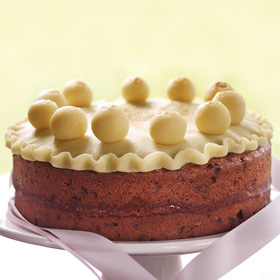
Simnel cake

One of the oldest Christian festivals, Easter marks Christ’s resurrection from the dead. Simnel cake has at some point been adopted as a traditional Easter cake.

The 11 marzipan balls on the top represent the apostles, minus the treacherous Judas.
Preparation time – 30 minutes
Cooking time – 2¼ hours
Calories per slice – 722 Kcal
Fat per slice – 30g
of which saturated – 13.2g
Makes – 11 slices
Suitable for vegetarians

Butter 250g (9oz), softened
Light muscovado sugar 250g (9oz)
Eggs 4
Plain flour 300g (11oz)
Baking powder 1 tsp
Ground mixed spice 2 tsp
Ground almonds 50g (2oz)
Luxury dried mixed fruit 500g (1lb 2oz)
Lemon 1, finely grated zest and 2 tbsp juice
White marzipan 500g (1lb 2oz)
Apricot glaze or sieved apricot jam 2 tbsp

1 Preheat the oven to 150°C/300°F/Gas 2 and line a 20cm (8in) cake tin with baking parchment.

2 Cream together the butter and sugar until light and fluffy. Beat in the eggs one at a time, adding a spoonful of the flour along with each egg. Sift in the remaining flour, baking powder and spice and fold the almonds, dried fruit and lemon zest and juice into the mixture. Spoon half into the cake tin and smooth the surface level.

3 Roll out one third of the marzipan until it’s a circle, just smaller than the cake tin, and lay it on top of the mixture in the tin. Spoon the remaining mixture over the top and level the surface.

4 Bake the cake in the centre of the oven for 2–2¼ hours, or until a skewer comes out clean after being inserted into the cake. Cover with a sheet of baking parchment if it starts to brown. When cooked, remove the cake from the oven and leave to cool.

5 Remove the cake from the tin and peel away the lining paper. Spread the apricot glaze or jam over the top. Roll out half of the remaining marzipan to fit the top of the cake. Place it on the cake and smooth down, taking care not to trap any air pockets underneath. Pinch around the edges.

6 Divide the remaining marzipan into 11 pieces and roll each into a ball. Brush a little apricot glaze or jam onto the base of each and evenly space around the top of the cake. Place under a hot grill to brown the marzipan lightly. Remove from the grill and leave to cool before serving.

Cook’s tips
• The cake will keep in an airtight container for up to a week.
• If you have a choice of marzipan, choose white marzipan, which has a more natural flavour than golden marzipan.

Recipe taken from Around Britain Dairy Cookbook available for a short period at just £2.99!

Follow us on Twitter! Follow us on Twitter
Follow us on Facebook! Become a fan

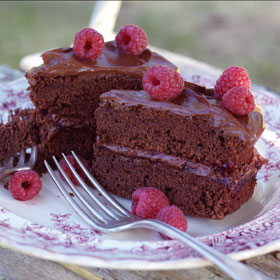
Chocolate Whisky Cake

Every Scottish baker has their own recipe for chocolate cake and this one incorporates whisky, which complements the flavour of the chocolate. There is also a hidden ingredient (a Scottish favourite), which helps give the cake its rich, moist texture.

Chocolate Whisky CakePreparation time – 25 minutes
Cooking time – 25 minutes
Calories per portion – 435 Kcal
Fat per portion – 24g of which saturated – 13.6g
Serving – 10
Suitable for vegetarians
Suitable for freezing

Very dark plain chocolate 175g (6oz)
Unsalted butter 110g (4oz), softened
Light brown sugar 175g (6oz)
Cold finely mashed potato 75g (3oz)
Eggs 2, beaten
Self-raising flour 175g (6oz)
Salt 1⁄2 tsp
Milk 4 tbsp
Double cream 125ml (4fl oz)
Icing sugar 50g (2oz), sifted
Whisky 3 tbsp
Raspberry jam 3 tbsp
Raspberries to decorate

1 Preheat the oven to 190°C/375°F/Gas 5 and grease and line two 20cm (8in) Victoria sandwich cake tins. In a heatproof bowl, break 50g (2oz) of the chocolate, and place over a pan of gently simmering water to melt.

2 In another bowl, beat together the butter and brown sugar until pale. Beat in the melted chocolate and mashed potato.

3 Gradually beat in the eggs, adding a little of the flour with each. Sift the remaining flour and salt into the mixture and add the milk. Gently fold together until well combined.

4 Divide the mixture equally between the prepared tins and smooth over the tops. Bake for about 25 minutes until risen and springy-firm to the touch. Turn onto wire racks to cool completely.

5 Melt the remaining chocolate as above and cool for 10 minutes. Add the cream, the icing sugar and the whisky. Carefully whisk together until thick and creamy. Spread the jam over one half of the cake and then spread half the chocolate cream on top. Sandwich together with the other half. Spread the remaining chocolate cream on top. Decorate with fresh raspberries before serving.

Cook’s tip
If whisky isn’t your preferred tipple, dark rum or brandy also works well with chocolate, or replace with orange juice for a non-alcoholic version.

Recipe taken from Around Britain Dairy Cookbook.

1 32 33 34 37