Gardening

Pretty in Pink – step-by-step guide to a wonderful late winter basket

Pretty-in-Pink

.

I would love to be green-fingered. My attempts at gardening have varying success and our garden is prettily passable.

I do love planting up pots and baskets though as I can follow a failsafe method, which yields a beautiful display. I take much inspiration from our book, Seasonal Garden Ideas, as there are lots of step-by-step projects, which take only an hour or so to create but give stunning results.


This easy project takes less than an hour and gives instant impact.

Pretty in Pink Planted Basket

A step-by-step guide to a wonderful late winter basket

Make a pretty basket of pink hyacinths
special by adding hoops of pussy willow
twigs with the soft grey catkins just
bursting out – a lovely display that
should last for several weeks.

When to prepare the Pretty in Pink projectPussy willow twigs are available in early spring, either in hedgerows or from florists. Pot-grown hyacinths can be found in garden centres from January through to May or even later.

Planting up a basket takes about an hour.

Plants required

  • Ten to twelve pink Dutch hyacinths just coming into flower.
  • Six to eight pussy willow twigs each about 45cm (18in) long.

Equipment required

  • Rustic-weave basket.
  • Hanging-basket liner (plastic, hessian, felt or moulded paper).
  • Bulb compost to fill.
  • Several handfuls of moss to tuck around the base of the hyacinths.
  • Trowel.

Method

1 Place the liner you have chosen in the bottom of the basket, pricking holes through for drainage if needed. Fill the basket two-thirds full with bulb compost.

2 Carefully remove each hyacinth, one at a time, from their pots and plant in the basket, adding more compost and setting each one to the same depth as it was in its pot. Place them as close together as you can, so the heavy flowerheads will support each other, and firm in well.

3 Tuck moss loosely around the base of the hyacinths to cover the soil completely. Water lightly.

4 Wedge the bottom end of a pussy willow twig into the basket weave then bend it over to form a hoop. Tuck the tip of the twig securely into the basket, then repeat with the other twigs all round the basket, overlapping the twigs slightly as you go.

5 Position your basket in a sunny spot for best display. The furry grey catkins will eventually turn bright yellow as they open.

Tips
Take great care not to knock the pussy willow catkins off the twigs as you handle them – they are quite fragile. If the hyacinth stems start bending over, insert thin bamboo canes into the compost and tie the stems to them as discreetly as possible with soft string. Bring under shelter if heavy rain is threatened.

Note
Reuse your rustic basket for a summer display by planting with nasturtiums or begonias.

Aftercare
By its very nature this is a temporary display. When the hyacinth flowers have withered, stop watering and allow the foliage to turn brown. Then remove the bulbs from the basket, clean them carefully and store in a dry, dark place until autumn, when you can plant them out in the garden. Discard the pussy willow twigs when the catkins have flowered.
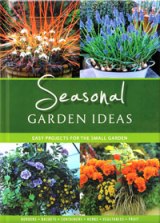
 

Seasonal Garden IdeasProject taken from
Seasonal Garden Ideas

Now available for just £3.99

BUY NOW


And don’t forget to enter our free prize draw to win a £25 national garden gift card.

Win a £35 National Garden Gift Card

.

.

.

.

.

Spring gardening ideas | Summer baskets

Baskets that flower throughout the summer

.

Baskets that will flower throughout the summer

Bursting out all over in a profusion of blooms, this huge blue and yellow themed hanging basket contains no fewer than ten different kinds of plant – they come into flower at different times, so providing a long-lasting display.

Plant in spring for flowering throughout the summer. There are a lot of plants here, so allow an afternoon for the job.

Plants

  • Buy all the plants needed for this basket as small container-grown plantlets.
  • Three plants are included for their foliage: Helichrysum petiolare; creeping Jenny (Lysimachia nummularia); and Swedish ivy (Plectranthus coleoides ‘Variegatus’).
  • Seven are chosen for their flowers: purple heliotrope ‘Marine’; petunia; trailing verbena; lobelia; nemesia; French marigold; tradescantia. Note: in the picture, not all plants are in flower.

Equipment

  • Large hanging basket with chains and hook.
  • Hanging basket liner (plastic, hessian, felt or moulded paper).
  • Potting compost.
  • Trowel.
  • Slow-release fertiliser spike.

Planting

1 Water all the plants thoroughly the day before you plan to plant them.

2 Insert the liner into the basket – prick small drainage holes through if necessary.

3 Planting such a large and varied basket requires a careful building up of layers of plants. Spread a sheet of newspaper or plastic on the ground, then take all your plants out of their original little pots and arrange them in size order on the sheet. Each should be placed in the basket according to the size of its rootball – bigger ones deeper in, smaller ones nearer the top.

4 Put a layer of compost into the bottom of the basket. Start planting, spacing the different plants around the basket, firming in, then topping up with more compost. Plant another layer and repeat the procedure. Note that the three foliage plants – the helichrysum, creeping Jenny and Swedish ivy – are all placed at the front so they can trail downwards, while the double-flowered petunia is placed centrally. Deep blue lobelias have been positioned all round the edges.

5 When the planting is complete, top up the compost to within 2.5cm (1in) of the top of the basket and insert a slow-release fertiliser spike. Hang it up in its designated position, making sure the hook and fixings are strong enough to take the considerable weight. Water thoroughly.

Tip
Invest in a long-handled, pump-action watering can to make watering your hanging basket easier – and to save you taking it down every day or climbing up a ladder to reach it.

Note
Many, but not all, of these plants are annuals and will not survive the winter. However, even those that are hardy and evergreen, such as the Swedish ivy, will be exhausted by the end of summer – so it’s best to discard the whole lot when flowering stops and plant anew in spring.

Aftercare
Water regularly – at least once a day in hot weather. Deadhead withered and faded blooms to prolong flowering and remove any damaged or discoloured foliage.

Project taken from Seasonal Garden Ideas. Available now.


Plant a spring flower medley in one hour

How to plant a spring flower medley

.

Celebrate the start of spring with these easy planted pots

Well thank goodness……..spring begins on Wednesday.

Let’s hope it heralds plenty
of sunshine and new growth.

I have already glimpsed swathes of crocuses and the daffodils are bravely shooting through our lawn at the moment. The front garden does need a little help though as it’s still looking pretty sparse.

Seasonal Garden IdeasThis easy project from Seasonal Garden Ideas
(£3.99 dairydiary.co.uk) is perfect to brighten it up!


.


Spring Flower Medley

Spring-Flower-Medley-2The beauty of growing plants in pots is that you can bring very different species together to form interesting associations – as proved by this captivating little group themed around the colour blue.

Buy the different plants in March and pot up for flowering in April and May. Takes about one hour. Plant in full sun.

What you need

Plants

  • Three deep blue hyacinths (Hyacinthus orientalis ‘Delft Blue’), in leaf, flower buds showing.
  • Five to seven Iris reticulata ‘Harmony’ in leaf.
  • Ten to twenty grape hyacinths (Muscari armeniacum).
  • Three small pots of Anemone blanda ‘Violet Star’.
  • One large pot of trailing variegated ivy (Hedera).

Materials

  • Three blue ceramic pots (or any other containers of your choice).
  • Two small terracotta pots.
  • One watering can with a wide mouth.
  • Enough soil-based potting compost to fill all the containers.
  • Broken crocks for drainage.
  • Horticultural grit or gravel (optional).
  • Trowel.

Instructions

1 Water all the plants thoroughly so the rootballs are moist right through. Line all the containers with a layer of broken crocks for drainage.

2 Start filling each container with compost. About halfway up, place the plant in its pot into the container to check for the right level. The top of the rootball should be about 4cm (1½in) below the rim of the container. Add more compost as needed.

3 Carefully tip each plant out of its pot, supporting the rootball and compost with your fingers on each side of the plant stems. Place in the container, firming in gently, then top up with more compost all round the plant, aiming to keep the top of the compost 4cm (1½ in) below the container rim. Firm the plant(s) again, then lift the whole container and tap or bump it gently against the ground to settle the compost and even it out all round.

4 Repeat the planting procedure for all the containers and plants. Water them all thoroughly using a fine rose on your watering can. If you like, scatter a layer of horticultural grit or gravel on top – this will keep weeds at bay, help to retain moisture and give a neat appearance.

5 Finally, position the newly planted containers in their allotted spot and wait for them to flower.

Tips
Choose a spot in full sun for the Anemone blanda – these only open fully when the sun is shining right on them.

Notes
When choosing your containers, bear in mind overall size and height. The aim is to have a range of sizes from short at the front to tall at the back.

Aftercare
Support the top-heavy hyacinths with discreet bamboo canes and soft string ties if needed. As with most bulbous plants, when the hyacinths, grape hyacinths and iris have finished flowering, allow the leaves to die back completely before lifting the bulbs/corms/rhizomes and planting in the garden. Alternatively, discard the old plants and replace next year with new.

Project taken from Seasonal Garden Ideas.

How to grow kitchen herbs

Herbs

.

How to grow your own herbs for the kitchen

Whilst doing all the testing for our next cookbook, I have come to realise just how expensive fresh herbs can be. They don’t last long in the fridge either and often go to waste if I forget to freeze any leftovers.

So, this year I am
determined to grow
my own.

It will be wonderful to step out of the kitchen door to the subtle scent of sage, mint and rosemary, and be able to clip a few leaves off to add to salads, soups and stews.

Here are some tips on how to sow your own seeds. Something I haven’t done for a long while!

Grow kitchen herbs

Grow kitchen herbs

Pot Herbs for the Kitchen

Fresh herbs give a great lift to many foods – so grow your own in pots sited near the kitchen for ease of picking. And why not choose some colourful, fun containers to plant in?

Sow seeds in March, or buy small herb plants in April or May, pot up at once and start picking leaves as soon as the plants have grown slightly. A sunny position is best. The job will take about an hour.

What you need

Plants Seed packets or small plants of parsley, thyme, marjoram (oregano), sage, mint and rosemary.

Equipment Six small plastic pots for potting up seedlings bought at the garden centre. Seed tray, modular cell system or jiffy pots for sowing seeds, if using. Five containers such as the enamel kettles. Soil-based potting compost and proprietary seed compost if using. Broken crocks for drainage. Trowel.

Instructions

1 Fill the seed tray or modular cell system with seed compost and sow your seeds according to the instructions on the packets, or sow in jiffy pots according to the manufacturer’s instructions. Keep on a kitchen windowsill while the seeds germinate, then move them outside when all danger of frost is past.

2 When the seedlings are large enough to handle, pot them on into the plastic pots using potting compost and lining with broken crocks for drainage.

3 Or, line the plastic pots with broken crocks and fill with potting compost, into which you have mixed some sharp sand (if using). Then plant your garden centre seedlings, place into the containers and set out in an attractive arrangement. In general, allow one herb per container, but if the container is big enough, put several in together – here rosemary, parsley and mint have been put in the central container.

4 Place the young herb plants outside only when all danger of frost is past. If you’re uncertain, place them outside on sunny days and bring them in at night until the weather warms up enough for them to be left outside permanently.

5 Pick and use the leaves regularly. All these herbs can grow quite large and, by the end of summer, may well have outgrown their containers unless you keep them under control.

Notes Most herbs do best in full sun. They don’t require rich soil, but they must not be allowed to get waterlogged, so good drainage is essential. Rosemary, sage, thyme and marjoram are tough, shrubby plants and can be kept going for years if put into the ground or grown in large enough pots. Mint and parsley are herbaceous and will die down in winter, but reappear again in spring.

Aftercare Regular picking is needed, and watering with care.

.
Seasonal Garden IdeasThis project is taken from
Seasonal Garden Ideas 

a collection of lovely, easy
projects for any garden.

Now available online
for just £3.99  

PLUS FREE P&P!
(Feb/March 2013 orders).

Plant now for a gorgeous spring display

Plant now for a gorgeous spring display

I would adore to live in a chocolate-box thatched cottage, or an imposing Victorian townhouse, but the reality is actually a 1980s red brick square.

We live in a lovely village and our house is very practical for a busy family, but what it’s not is pretty.

So my mission is to try and soften its
appearance with a gorgeous garden.

As time and money are not in abundance at the moment I need to start small.

Seasonal Garden IdeasWith this project from our
Seasonal Garden Ideas book, the
patch of lifeless soil underneath
the living room window can be
transformed into a fiery riot of
colour (fingers crossed!)

Click here simple step-by-step instructions.

Seasonal Garden Ideas is available for just £3.99 – it is an ideal low-cost Christmas Gift for family and friends.


How to Attract Butterflies to Your Garden

Butterfly

It was National Butterfly Awareness Day on Saturday, which got me thinking about butterflies and how to attract them to the garden.

I used to have a gorgeous cottage garden full of butterfly-friendly well established plants, including a huge buddleia they loved. The garden was always full of flitting butterflies but this new one – which was devoid of everything except a dilapidated pond – is pretty empty.

So! I am now on a mission, not only to get the garden looking lovely but also attracting butterflies too.

But what to plant? The Eden Project has these tips:

To attract butterflies, it helps to start off by encouraging caterpillars to breed. Believe it or not, caterpillars are fussy eaters. If they don’t have the right type of leaf to eat, they’d rather starve than vary their diet with another leaf. Plant caterpillar-friendly plants and they’ll lay their eggs on these particular leaves (and not your cabbages), happily transforming into butterflies.

These plants are a caterpillar’s delight:

  • Dutchman’s pipe – look out for Pipevine swallowtail butterfly
  • Milkweed – look out for Monarch butterfly
  • Black eyed susan – look out for Great spangled fritillary butterfly

Plant a garden awash with colour
Plant in clumps of colour, as this will gain butterflies attention more than isolated flowers. Butterflies are particularly attracted to pinks, purples and yellows so think pink flowering clematis, the aptly named butterfly bush (buddleia), rosemary with its beautiful blue flowers, and lavender.

Create a butterfly sunbed
Did you know that butterflies need to be between 28-38 degrees celsius, and that they struggle to fly when they’re too cold? That’s why butterflies love sunbathing on large flat stones that have spent all day absorbing the sun. In your garden, it’s really helpful if you leave a few flat stones around in sunny south facing positions sheltered from the wind to give them a nice warm resting place.

Avoid using nasty chemicals
Most of those harmful chemicals that get rid of garden pests also get rid of butterflies. Instead, try coir compost. It’s naturally insect and pest-resistant, while encouraging your plants to grow healthily. Coir is a wonderfully sustainable product, as it’s made out of the inner coconut husk – a by-product that would usually be thrown away.

Luckily, I LOVE lavender, and I shall be planting this in abundance.

I might even edge the lawn at the front with it so it engulfs you with its aroma as you wander past. I’d better done my gardening gloves and get planting!

Follow us on Twitter! Follow us on Twitter

Follow us on Facebook! Become a fan