Author Archives for Emily Davenport, Head of Dairy Diary

About Emily Davenport, Head of Dairy Diary

Head of Dairy Diary; I'm passionate about producing high quality products that our customers will cherish. I'm also a mum of three and I enjoy cooking, walking, gardening and painting with my family, as well as printmaking (when I find the time!)

100 Things to do with Children (even when it’s raining!)

Try a night at the museum

Didn’t everything seem magical as a child? Days were longer and sunnier, grass was greener, and in my day meadows still existed!

Despite the nation’s obsession with reality TV, computer games and the internet…

I am determined to ensure
my children’s childhoods
are just as magical,
carefree and fun.

This weekend is Museums at Night Weekend

This sounds really exciting (though potentially spooky at somewhere like the Natural History Museum!) with different events all over the country. Including: Dust off your art books and exchange them for fresh ones at The Crescent in Scarborough, join other sketchers for a live drawing session at The Liver, or heat things up with a spot of raku firing at The Biscuit Factory.

Though I really fancy the art book swap, it’s a bit far for us to trek, so we will opt for Bizarre Bazaar and Return of the Leeches at our local museum, The Brampton – sounds intriguing!

The National Trust have also launched a venture to encourage children to play, with their 50 Things To Do Before You’re 11¾ list.

This includes: run around in the rain; eat an apple picked straight from the tree; feed a bird from your hand; visit an island and find some frogspawn. I’m afraid there are a couple of there that I am too late to achieve: find a geocache (never existed before I was 11¾) and bring up a butterfly.

Luckily I can tick all the others off my list (25 years late!) The most memorable for me must be go on a nature walk at night. With my parents and cousin, we walked along a Canadian highway lit by the light of a full moon with the local forest ranger. He called to some local wolves, who all howled back (including their pups). It was breathtaking!

So what of the 50 things will you do with your children or grandchildren this weekend?
Or will you opt for a drier option indoors at the museum? I’d love to know!

Pigs in blankets recipe.Don’t forget to take your picnic:
try this popular Pigs in Blanket
recipe – made with bread blankets
it makes for great finger food.

Follow us on Twitter! Follow us on Twitter
Follow us on Facebook! Become a fan

Pigs in Blankets

Pigs in blankets recipe.

Made with bread blankets these pigs are great finger food.

Pigs in Blankets

These gorgeous little morsels are a great snack for a chilly day! These perfect Pigs In Blankets are a Dairy Diary recipe. For more delicious recipes visit the Dairy Diary Recipe Collection.

CLICK HERE FOR RECIPE

10 ways to help honeybees

10 ways to help honeybees

This week is National Honey Week. And what a wonderful thing honey is.

Sweet and sticky and delicious; evocative of childhood days spent reading Winnie the Pooh!

It’s so comforting, spread onto freshly made buttered toast. Mmmm.

We have all heard in the media that honeybees are under threat. According to Dr I Davis, President of the Beekeepers’ Association (reported in the Guardian) there are ways we can help:

10 ways to help honeybees

1. Become a beekeeper
Beekeeping is a most enjoyable, fascinating and interesting hobby – and you get to eat your own honey too. Every year local beekeeping associations run courses to help new people to take up beekeeping and even help them find the equipment they need and a colony of bees. Training programmes continue to allow enthusiasts to become Master Beekeepers. For information on courses visit the British Beekeepers’ Association (BBKA) website

2. Help to protect swarms
Swarming is a natural process when colonies of honeybees can increase their numbers. If you see a swarm contact the local authority or the police who will contact a local beekeeper who will collect the swarm and take it away. Honeybees in a swarm are usually very gentle and present very little danger. They can be made aggressive if disturbed or sprayed with water. Just leave them alone and wait for a competent beekeeper to arrive.

3. Plant your garden with bee friendly plants
In areas of the country where there are few agricultural crops, honeybees rely upon garden flowers to ensure they have a diverse diet and to provide nectar and pollen. Encourage honeybees to visit your garden by planting single flowering plants and vegetables. Go for all the allium family, all the mints, all beans except French beans and flowering herbs. Bees like daisy-shaped flowers – asters and sunflowers, also tall plants like hollyhocks, larkspur and foxgloves. Bees need a lot of pollen and trees are a good source of food. Willows and lime trees are exceptionally good. the BBKA has leaflets on bee friendly trees and shrubs.

4. Buy local honey
Local honey will be prepared by local beekeepers. This keeps food miles down and helps the beekeeper to cover the costs of beekeeping. Local honey complies with all food standards requirements but is not mistreated to give it a long shelf life. It tastes quite different to foreign supermarket honey and has a flavour that reflects local flora.

5. Ask your MP to improve research into honey bee health
Beekeepers are very worried that we do not have enough information to combat the diseases that affect honeybees. Pollination by honeybees contributes £165m annually to the agricultural economy. Yet the government only spends £200,000 annually on honeybee research. Beekeepers have costed a five-year, £8m programme to secure the information to save our bees during which time pollination will contribute more than £800m to the government coffers. Even the Defra minister, Lord Rooker, who holds the purse strings to finance this, has said that without this extra research we could lose our honeybees within ten years. Write to MPs in support of the bee health research funding campaign.

6. Find space for a beehive in your garden
Many would-be beekeepers, especially in urban areas, find it difficult to find a safe space for their colony of bees. If you have some space contact your local beekeeping association and they could find a beekeeper in need of a site. It is amazing what a difference a beehive will make to your garden. Crops of peas and beans will be better, fruit trees will crop well with fruit that is not deformed and your garden will be buzzing!

7. Remove jars of foreign honey from outside the back door
Believe it or not but honey brought in from overseas contains bacteria and spores that are very harmful to honeybees. If you leave a honey jar outside it encourages honeybees to feed on the remaining honey. There is a good possibility that this will infect the bee and in turn the bee will infect the rest of the colony resulting in death of the colony. Always wash out honey jars and dispose of them carefully.

8. Encourage local authorities to use bee friendly plants in public spaces
Some of the country’s best gardens and open spaces are managed by local authorities. Recently these authorities have recognised the value of planning gardens, roundabouts and other areas with flowers that attract bees. Encourage your authority to improve the area you live in by adventurous planting schemes. These can often be maintained by local residents if the authority feels they do not have sufficient resources.

9. Learn more about this fascinating insect
Beekeeping is fascinating. Honeybees have been on this earth for about 25 million years and are ideally adapted to their natural environment. Without honeybees the environment would be dramatically diminished. Invite a beekeeper to come and talk to any local group you support and give an illustrated talk about the honeybee and the products of the hive. They might bring a few jars of honey too Honeybees are a part of our folklore and are one of only two insect species that are managed to provide us with essential services.

10. Bee friendly
When kept properly, bees are good neighbours, and only sting when provoked. Beekeepers wear protective clothing when they are handling bees. If a bee hovers inquiringly in front of you when unprotected, do not flap your hands. Stay calm and move slowly away, best into the shade of shed or a tree. The bee will soon lose interest. It is worth remembering that bees do not like the smell of alcohol on people, the “animal” smell of leather clothing, even watchstraps. Bees regard dark clothing as a threat – it could be a bear! Bees are sometimes confused by scented soaps, shampoos and perfumes, best avoided near the hive.

Try this delicious recipe and find more honey recipes on the Dairy Diary website.

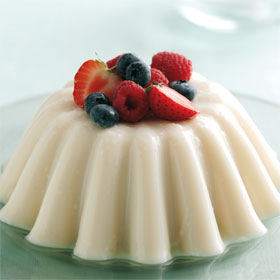
Honey BlancmangeHoney Blancmange

Honey can be used in many different ways in cooking. Such as in this childhood favourite that is sure to be a favourite with adults too. Recipe from The Dairy Book of Home Cookery.

CLICK HERE FOR RECIPE

Follow us on Twitter! Follow us on Twitter
Follow us on Facebook! Become a fan

Honey Blancmange

A childhood favourite; this honey blancmange will be a favourite with grownups too!

Honey Blancmange

Honey Blancmange

Recipe taken from The Dairy Book of Home Cookery.

CLICK HERE FOR RECIPE

Follow us on Twitter! Follow us on Twitter
Follow us on Facebook! Become a fan

Mum’s Essential Tips

I have been browsing through one of our household tips books, researching features for the 2014 Dairy Diary and it got me thinking about the tips my mum has passed on to me.

It’s quite incredible how technology has advanced in the last 30 years or so and, as a consequence, the way we look after our homes has changed dramatically.

I think we have lost some
valuable skills and knowledge
through the generations.

There is some very simple advice Mum has passed on, such as, leaving the covers back each morning to air the bed and putting a pudding in the oven whilst the roast is cooking (to make the most of the energy used). We always used to have a good old-fashioned rice pudding or egg custard after our Sunday roast.

It’s about time I revived this tradition I think, especially in an age when being ‘green’ is so important. I even remember her using something called Economy Seven, where she would put the washing machine on during the night when electricity was cheaper. Does anyone else remember this?

Mum isn’t a keen cook, but she always baked with me as a child as she knew how much I loved it.

Most vividly, I remember making sweets, such as peppermint creams and coconut ice.

We used to give them as gifts. Such fond memories, thanks Mum!

In homage to those halcyon days, I am going to do my best to persuade my train loving, baking-reluctant little boy to make some of these cute little sweets with me at the weekend.

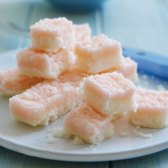
Coconut Ice recipeThis Coconut Ice recipe is taken from The Dairy Book of Home Cookery, a family heirloom in its own right! Many sons and daughters have been given one by their mum upon leaving home. Still full of those crucial basics we all love, with the addition of some new classics, the 2012 edition is available to buy online at the Dairy Diary website.

Follow us on Twitter! Follow us on Twitter
Follow us on Facebook! Become a fan

Coconut Ice

They look wonderful and would make a super present.

Coconut Ice from The Dairy Book of Home CookeryMakes 50
Preparation 15 mins plus setting
Cooking 25 mins
Per portion 52 kcals
2g fat (1.3g saturated)
Suitable for vegetarians
Suitable for freezing

75ml (2½fl oz) milk
450g (1lb) granulated sugar
15g (½oz) butter
110g (4oz) desiccated coconut
½ tsp vanilla extract
Pink food colouring

1 Pour milk and 75ml (2½fl oz) water into a saucepan. Bring to the boil. Add sugar and butter. Heat slowly, stirring, until sugar dissolves and butter melts. Bring to the boil. Cover pan and boil gently for 2 minutes.

2 Uncover and continue to boil steadily, stirring occasionally, for 7–10 minutes or until a little of the mixture, dropped into a cup of cold water, forms a soft ball when rolled gently between finger and thumb. Temperature on sugar thermometer, if using, should be 116°C (240°F). Remove from heat.

3 Add coconut and vanilla. Beat briskly until mixture is thick and creamy. Pour half into an 18cm (7in) square tin lined with non-stick baking paper. Quickly colour remainder pale pink with food colouring. Spread over white layer. Leave in the tin until firm and set. Cut into squares.

Recipe taken from The Dairy Book of Home Cookery

Follow us on Twitter! Follow us on Twitter
Follow us on Facebook! Become a fan