Tag Archives: Seasonal Garden Ideas

Plant up your Autumn displays

If like me your summer pots are starting to look a little bedraggled, don’t resign them to the shed just yet.

Now’s the time to plant up gorgeous displays in time for autumn – you’ll be the envy of your street!

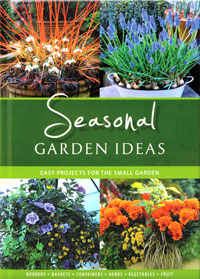
Seasonal Garden IdeasYou could use a mix of glorious heathers, teamed with velvety rich pansies or try chrysanthemums as shown below.

Half price offer!

The following project – and many more to give your garden autumn glory – comes from Seasonal Garden Ideas available at half price now online! Wow!

Follow us on Twitter! Follow us on Twitter

Follow us on Facebook! Become a fan

Box of Autumn Delights

Capturing the very essence of early autumn, this box of fiery orange chrysanthemums takes pride of place on a white picket fence and rivals any summer display for colour and richness.

Plant up this box in late summer for flowering throughout September and into October. Full sun or part shade. It should take about an hour.

Seasonal Garden Ideas projectPlants required

  • Two bushy pot-grown chrysanthemum plants – buy them in bud, not fully open, so you get the maximum display in your own garden.
  • One each of the following plants: Chinese lantern (Physalis alkekengi), creeping Jenny (Lysimachia nummularia), Ajania pacifica ‘Desert Flame’, sedge (Carex ‘Evergold’) and stonecrop (Sedum ‘Lemon Ball’).

Equipment required

  • Rectangular wooden windowbox or trough, painted pale yellow.
  • Soil-based potting compost.
  • Broken crocks for drainage.
  • Trowel.

1 Water all the plants thoroughly the day before you plant them in the box – they are packed in very tightly which means the compost will dry out quickly, so you need to give them the best possible start.

2 If you have just painted your container, make sure the paint is absolutely dry before starting to plant. Put a layer of broken crocks in the bottom of the container for drainage, then half-fill with compost.

3 Plant the chrysanthemums first, one at each end of the box, checking that their rootballs are at the same depth as they were in their original pots. Firm in.

4 Place the Chinese lantern between the chrysanthemums, then insert the four foreground species: from left to right, creeping Jenny, Ajania, sedge and stonecrop. Set each plant in position, then trickle compost on and around the rootballs, covering each one completely and firming in as you go. Use your fingers to push the compost tightly all round the plants. Fill the box with compost to within 4cm (1½in) of the rim.

5 Hang the box on the fence, or position it wherever you want the display to be, then water thoroughly. This combination needs full sun to perform at its best.

Tip

When buying the chrysanthemums, don’t just pick the first one you see. They can vary considerably in size and quality. Look over all the specimens available, and go for the one with most buds – count them if necessary! It’s a simple trick, but it does ensure you get a plant that will literally flower its head off.

Note

Ajania is quite an unusual, sub-shrubby plant that does well in a sunny position. It’s sometimes called the ‘gold and silver chrysanthemum’. If you can’t find one, replace with marigolds.

Aftercare

Don’t allow the compost to dry out – keep it just moist to the touch. Deadhead the chrysanthemums as the flowers fade. When the display is over, remove all the plants and plant in the ground – they won’t survive more than one season in such a crowded container.

Project taken from Seasonal Garden Ideas.

Follow us on Twitter! Follow us on Twitter

Follow us on Facebook! Become a fan

Celebrate Summer

It’s a celebration of summer this week with Midsummer’s Day on Thursday and the Summer Solstice today. Midsummer’s Day is primarily a Celtic fire festival, which represented the middle of summer.

It dates back several millennia, and many stone circles (such as Stone Henge) are aligned to the sunrise on this day.

Midsummer fires would be lit all over the countryside, and it was customary for people to jump through the fires, folklore suggesting that the height reached by the most athletic jumper would be the height of that year’s harvest. After Christianity was adopted in Britain, the festival became known as St John’s Day; the birthday of St John the Baptist. Traditionally St John’s Eve was seen as a time when fairies were thought to be at their most powerful (hence Shakespeare’s Midsummer Night’s Dream).

Back to reality and modern life, I don’t think too many of us will be jumping fires on Thursday, but we can enjoy today’s Summer Solstice. And what a glorious day for it! The sun is shining, and hedgerows and gardens bursting with flowers.

Why not make the most of the extra daylight and make the Foliage Fountain – it’s an elegant hanging basket and it only takes an hour. And for such minimal effort, what a result! The vivid colours will brighten up any porch or doorway.

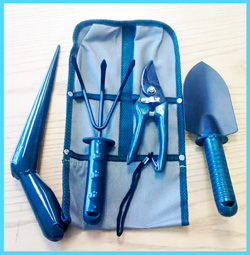
Win a Portable Gardening Set with Dairy DiaryTo celebrate summer, we are giving away two portable gardening sets

Each portable set contains a handy pouch with a fork, trowel, dipper and secateurs. It takes just a few seconds to enter online – so why not do it now? Good luck.

Project taken from Seasonal Garden Ideas now available from the Dairy Diary store.

Follow us on Twitter! Follow us on Twitter
Follow us on Facebook! Become a fan

Foliage Fountain

A bold and impressive array of plants spills out of this eye-catching terracotta hanger like a fountain in full flow – the striking purple, pink and blue colour scheme is not for the faint-hearted!

Plant in late spring or early summer for a display that will last throughout summer. Planting will take an hour or so.

Foliage Fountain from Seasonal Garden IdeasPlants required
Large black Mondo grass (Ophiopogon planiscapus ‘Nigrescens’).
Sedge (Carex hachijoensis ‘Evergold’).
Coral flower (Heuchera ‘Palace Purple’ or ‘Licorice’).
Morning glory (Ipomoea tricolor ‘Heavenly Blue’).
Two deep pink busy Lizzies (Impatiens).
Fairy fan flower (Scaevola aemula ‘Blue Wonder’).

Equipment
Large conical terracotta hanging container (or any other container of your choice), with hanging rods and hook and drainage holes in the bottom.
Broken crocks for drainage.
Potting compost with added sharp sand or grit.
Trowel.

1 Water all plants thoroughly the day before planting. If your pot is cone-shaped like the one shown here, prop it up securely while you plant it.

2 Line the bottom of the cone with broken crocks for drainage. Fill three-quarters full with the compost mixture.

3 Plant the black Mondo grass first, placing it at the back. Firm in well. Place the busy Lizzies next, one each side of the black Mondo grass. Firm in.

4 Adjust the level of compost as needed, then plant the coral flower directly in front of the black Mondo grass.

5 Now deal with the front planting. Adjust the level of the compost again as necessary. Position the fairy fan flower to the left, the sedge in the centre and the morning glory to the right. Firm in, then top up with more compost to within 2.5cm (1in) of the rim of the container. Insert a slow-release fertiliser spike.

6 Hang the container securely in its permanent position, in full sun or light shade. Ensure all hooks and fixings are strong enough to take the full weight of the pot and its plants. Water thoroughly.

Tip
A hanging container like this must have good drainage holes. If the pot you have chosen hasn’t got any, use an electric drill to make some in the bottom.

Notes
The fairy fan flower (Scaevola), flowering on the extreme left here, is a fairly new plant to become available in garden centres. It hails from Australia and is tender. The morning glory shown here on the right will come in to flower in late summer, bearing deep blue blooms that each last only one day, but are followed by more all the time.

Aftercare
Water well, especially in hot weather. Deadhead the flowers as they fade.

Project taken from Seasonal Garden Ideas now available from the Dairy Diary store.

Follow us on Twitter! Follow us on Twitter
Follow us on Facebook! Become a fan

Wonderful weekend weather

Did you enjoy the fabulous weather over the weekend? Many people did, evidenced by the shortage of barbeque fuel in some shops!

Well, following the best weekend of the year to date, it may be unrealistic to expect the same for the bank holiday weekend.

But, if it does turn out to be a pleasant weekend, what better way to enjoy it than to get out and enjoy your garden. This weekend we will definitely try the Peppers in a Pot mini-project from Seasonal Garden Ideas. And enjoy a leisurely barbeque with friends – fingers-crossed!

Are you lucky enough to have tickets to the RHS Chelsea Flower Show this week? I am envious. If you haven’t got tickets the bad news is that the show is sold out. But you can follow the show on BBC – here’s the schedule.

Around Britain Dairy CookbookFancy winning a copy of the fabulous Around Britain Dairy Cookbook? Simply click here to enter. Good luck.

Follow us on Twitter! Follow us on Twitter
Follow us on Facebook! Become a fan

Peppers in Pots

Aubergines and sweet peppers can be grown outdoors in a sunny, sheltered site – choose a south-facing position and put out when all danger of frost is past – you should have the makings of a ratatouille on your own doorstep!

Buy container-grown young plants in May or June for cropping in August and September. Potting up the small plants will take an hour or so.

Peppers in PotsPlants required
One each of the following: aubergine ‘Short Tom’; hot pepper ‘Hungarian Wax’; sweet pepper ‘Earliest Sweet Red’. If you can’t find these varieties, look for others labelled as suitable for growing outdoors in containers.

Equipment required
Three terracotta pots (use plastic or ceramic if you prefer).Soil-based potting compost.Broken crocks for drainage.Trowel.Bamboo canes for support if needed.Potassium-rich liquid fertiliser.

1 Line each of the three pots with broken crocks for drainage. Half-fill with compost, then check the level of the rootball in each pot by sitting the small plants, still in their original containers, into the pots. The rootball should sit about 4cm (1½in) below the rim of the pot. Adjust the level of the compost accordingly.

2 Plant the aubergine and peppers, one to a pot, firm in well, then top up with compost. Water thoroughly.

3 Place the plants in a warm, sunny, sheltered spot, away from strong winds and draughts. Water regularly, but don’t allow the compost to become sodden. Support with bamboo canes and soft string if the stems start to bend over.

4 When the fruits start to appear, water every week with a liquid potassium-rich fertiliser (such as that recommended for tomatoes).

5 Don’t allow the plants to produce too many fruits – they won’t develop to a good size. For plants grown in pots of the size shown here, four or five is the maximum. Once the plant has this number developing, pinch out any further flowers – this will encourage the remaining fruits to grow larger.

Tip Red peppers are not a separate variety – they are green peppers allowed to remain on the stem until they ripen to a deep red colour. For use in the kitchen, pick them green – the weather in the UK may not be warm enough for outdoor peppers to ripen to red.

Note Check the plant labels carefully when buying young aubergine and pepper plants – new varieties are always coming on the market, many of them bred especially for outdoor and container growing. Your rate of success will be much higher if you choose the right variety in the first place.

Aftercare No particular aftercare is required. You will need to buy new young plants every year.

Project taken from Seasonal Garden Ideas. Now available at DairyDiary.co.uk

Follow us on Twitter! Follow us on Twitter
Follow us on Facebook! Become a fan