Top Tips

Christmas Tree Decorating Guide: 8 Top Tips

How to decorate your Christmas Tree

How to get your tree looking like the garden centre displays


We have inside knowledge from the chief tree decorator at our local garden centre, where I visit for gorgeous decorations and display inspiration every year!

They have given me some of the top tips that they follow each Christmas, to wow their customers with a winter wonderland.


Dairy Diary fans, we are delighted to share this expert advice to inspire you to create your own magical tree display at home.

Fluffing
Once you have picked the perfect place in your home, (which should be in a room where you can enjoy it the most and near a plug socket to avoid trailing wires), if you have an artificial tree; you should spend some time ‘fluffing’ up the branches to make sure it is as full and authentic as it can be. If you have a real tree, choose one in a pot that will last for the whole Christmas period without shedding too many needles.

Lights
Start from the top and fold over a single branch to hold the end of the fairy lights in place. Next, walk around your tree, weaving around each branch to ensure even coverage. We would advise at least 1000 lights for a 6ft tree. A little tip is to plug in the lights before you begin to check they are working (you don’t want to get to the end and realise a pesky bulb has blown!)

Colours & Themes
You can get creative with this. I usually browse Pinterest for theme ideas, or just go wild depending on how I feel that particular year. Don’t forget, it’s your tree and what you hang on the branches should ultimately make you happy! I have collected baubles and decorations over the years, each one bringing back a lovely memory and a smile to my face when they catch my eye.

Family Time
One thing about decorating the Christmas tree that I love the most is involving the whole household. Our favourite memories as children are helping to hang the baubles, whilst listening to Christmas music (and sneaking a few chocolates while we worked!). I am sure my Mum re-arranged the decorations after we had ‘helped’ as it always looked so magical afterwards. Top tip: Our Head of Dairy Diary buys each of her three children their own mini tree to decorate, their creations are always wonderful, but maybe not as neat and tidy as you’d wish for the living room display!

Baubles
My top tip is the rule of odd numbers. If you find a bauble or decoration that you love, buy at least three and add them to the tree together, spaced apart equally! This will give an aesthetically pleasing balance. Make sure to also secure heavier, glass, one of a kind or more expensive baubles by folding the branch over the tie.

Tree Skirt
This has only been a recent discovery in our household, during the last 5 years or so. We opt for a grey wicker tree skirt, to hide the unsightly wires and plastic tree base, which distracts from the magic. If you have a real tree, a tree skirt will also help to catch the needles.

Topper
Your tree might look fabulous without this, but we always opt for a statement decoration to adorn our hard work. You could go for the classic star, an angel or something a little quirkier. Artificial flowers have been popular in recent years, so have beautiful bows. The choice is yours, and there are lots to choose from!

Presents
This is the extra mile, and it may not be suitable if you have young children around. It may raise some awkward questions about the man in the red suit… BUT if you manage to get your Christmas shopping done a little earlier you could wrap them using beautiful wrapping paper, bows and tags, to match your tree theme. It finishes off the look with great effect. You could just wrap empty boxes if you haven’t been that organised this year and if you have family members who just can’t resist giving them a little shake!


Dairy Diary Advent CalendarHope you enjoyed reading our first 2020 Advent blog and took away some good tips!

As always, we would love to see your creations! Please share a picture of your beautiful Christmas tree and tag us on Facebook, or Instagram.

Make sure to use the below hashtags!
#DairyDiaryMoments
#DairyDiaryChristmas
#2021DairyDiary

And check our exciting Advent calendar every day for more tips, giveaways and treats.


Emma Snow
Emma Snow

I am the Brand Executive for Dairy Diary. A passionate foodie (with a very sweet-tooth). Who likes to blog about all things DIY & scrumptious recipes.


What Can You Freeze? Plus 3 ‘Eat & Freeze” Recipes

How to freeze food

What Can You Freeze?


As we need to minimise the number of times that we go out to shop, cooking several meals at once (or batch cooking) is a really good idea.

You can also freeze many ingredients to extend their shelf life.

See our useful freezing guide here.


3 Fabulous ‘Eat & Freeze” Recipes

These three scrummy recipes can be frozen; each gives specific instructions on how to freeze and defrost.


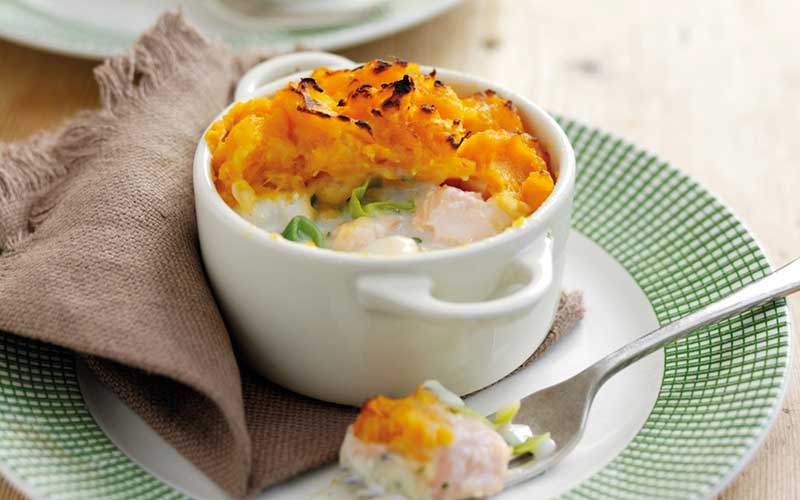
Golden Topped Fish Pie

Golden-Topped Fish Pies

These little pots of deliciousness give a modern twist to a traditional fish pie with a creamy sweet potato topping.


Moroccan Mince

Moroccan Mince

If you’re looking for comfort food (and we all need some comfort at the moment), look no further. This minced beef dish is packed full of sweet spices, vegetables and pulses. It’s really versatile as you can serve it with couscous, rice or in a wrap.


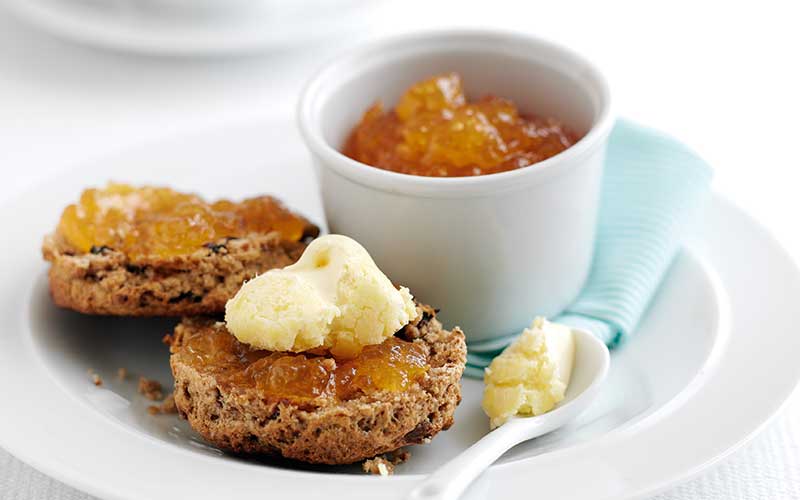
Ginger & Prune Scones

Ginger & Prune Scones

These gorgeous scones can be served warm after just an hour defrosting.


SAVE 20%

Just For One Or TwoThere is a whole ‘Eat & Freeze’ chapter in our Just for One or Two cookbook, which now has 20 per cent off!

Use code ONETWOAPRIL and you’ll get the book for just £6.60!


Categories:

See Where History Changed

See where history changed

New Ideas for Places to Visit


With all the miserable weather that we have been experiencing recently, it’s the perfect time to cosy-up indoors and plan some adventures for when it’s less blustery.

This feature from the Dairy Diary, introduces you to places where turning points in British history actually happened. I’m no history buff, but I find it fascinating and, as a foodie, I can most definitely recommend Ludlow as a must-visit destination.


See Where History Changed


It could all have been so different! Those turning points in history that set events off on a divergent path have a fascination all their own – it’s hard to resist playing the ‘what if’ game, especially in the places where they occurred. Be drawn in and enjoy some great days out.

Colchester

In AD 43, the Emperor Claudius accepted the surrender of the Celtic tribes at Camulodunum (aka Colchester) and declared this land to be the Roman province of Britannia. Colchester was its capital – until Boudicca, queen of the Iceni, took exception to the Roman presence and burnt it down. William the Conqueror built his first stone castle on the site of Claudius’s temple and the old Roman walls (built after Boudicca’s spirited fight-back) were finally breached after an 11-week siege by Oliver Cromwell’s cronies during the Civil War.

Most of the walls are still standing, however, including the Balkerne Gate featuring Claudius’s triumphal arch. Plenty more to discover here, but when exploring take a moment to consider the plight of the Roman veterans left at what turned out to be the sharp end and coming up against a very angry woman!

Pevensey Castle and Battle Abbey

Nowadays, Pevensey Castle (above) stands several miles inland but in 1066 the sea lapped at its walls and here it was that William of Normandy landed his invasion force, easily overwhelming the defenders.

The new king, Harold II, was away in the north, repelling Norwegian invaders at Stamford Bridge.

By the time he got back with his weary army, William was ensconced at Battle and everyone knows what happened next – 1066, the most memorable date in British history.

A Benedictine abbey was later built on the site, which is now in the care of English Heritage. You can explore the ruins of the abbey, walk round the battlefield, imagine the scene (with the help of an audio guide) and stand at the very place where Harold fell. Unforgettable! Why not go and take a look for yourself?

Runnymede

Visit Runnymede today and you will find a memorial to the sealing of Magna Carta, the ultimate game-changer. King John didn’t want to do it but in June 1215 he had no option. Precisely where the deed was done is a matter of conjecture – in these peaceful meadows, on nearby Magna Carta Island or under the Ankerwycke yew, a truly magnificent ancient tree on the opposite bank of the Thames (worth a visit on its own).

Four copies of the original document survive and can be seen in Lincoln Castle, Salisbury Cathedral and the British Museum. Editions from a few years later are in Durham and Hereford Cathedrals and the Bodleian Library, Oxford.

Banqueting House

Even in the days of civil war beheading a king was a radical step, and this is where it happened in 1649. Charles I pushed his luck until the increasingly powerful Oliver Cromwell and his cohorts had had enough. The trial, for treason and murder, took place in the magnificent Westminster Hall (part of the Houses of Parliament, visitors welcome).

The doomed king remained dignified to the last, walking through the glorious banqueting hall – the only part of Whitehall Palace to survive a fire of 1698, ceiling paintings by Rubens – and out through large windows onto the scaffolding erected outside. The crowd groaned as the deed was done and Britain became a republic.
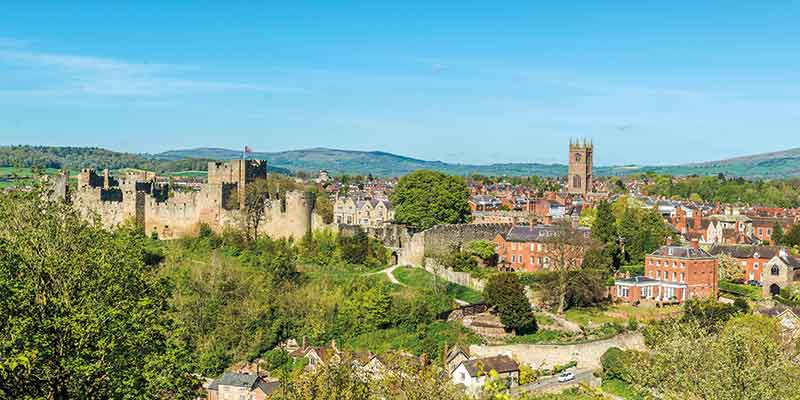
Ludlow Castle

Ludlow

Ludlow castle makes an impressive ruin. It was once a place of great strategic importance due to its position in the border country between England and Wales, and this is where, in 1502, events took an unexpected turn that changed the fate of England. For five months or so, the heir to the throne, Prince Arthur, had been living in the castle with his young Spanish bride, Catherine of Aragon, when he caught the ‘sweating sickness’ and died, aged just 15. His younger brother now became heir, and in 1509, having been duly crowned, Henry VIII married the widow and the rest is history.

Ludlow (above) remains an unspoilt, medieval town and a visit to one of the fairs or festivals held here provides present-day fun, as well as taking you back to a less predictable past.

Market Bosworth

Near this sleepy town is the Bosworth Battlefield Heritage Centre where the whole dramatic story of a major turning point in British history unfolds. The struggle for supremacy between the rival houses of Lancaster and York started with a skirmish in St Albans in May 1455 and ended on 22 August 1485 at Bosworth Field, Richard III’s last stand. About a mile from the heritage centre, Henry Tudor won the day for the Lancastrians and thus ended the Wars of the Roses.

Incredibly, Richard’s grave was discovered in 2012, under a car park. Monks had buried him hastily, not bothering with coffin or shroud, and the rumours about a crooked spine were proved to be true. On 26 March 2015 he was reburied with due pomp in Leicester Cathedral and the car park has protected status.

HMS VictoryPortsmouth

A day at the Historic Dockyard is not enough to experience all it has to offer, but whatever you do, don’t miss HMS Victory (above), the flagship of Admiral Lord Nelson. This is the ship on which Nelson led the line against a combined French and Spanish fleet off Cape Trafalgar, just south of Cadiz, and annihilated the enemy by dint of superior strategy, great leadership and iron nerve.

Napoleon’s plans to invade Britain were scuppered, his naval power crushed and British command of the sea ensured for a century.  That’s quite a result! Sadly, Nelson was killed during the action, his enduring status as national hero guaranteed.

White cliffs of Dover

Destroy air defences, dominate the skies, send an invasion force, accept surrender. That was the plan. It didn’t work thanks to the RAF’s determined retaliation and the skill and courage of the pilots. During the glorious summer and autumn of 1940, the first sky-only armed conflict was fought out over the Channel and the famous white cliffs. What better place to find the National Memorial to the Few? It’s located on the cliffs between Dover and Folkestone, open all year.

The Battle of Britain Monument in London is on Victoria Embankment, opposite the London Eye, and Spitfires (page 29) and Hurricanes are on show at RAF Cosford in Shropshire.

Game change averted

Despite best endeavours, Guy Fawkes and the gang didn’t blow up king and parliament, Elizabeth didn’t marry Dudley, Bonnie Prince Charlie didn’t press on to London. If any of these had succeeded, the course of history may have been fundamentally changed. And what would have happened if the Bletchley Park codebreakers hadn’t worked it out?

Coughton Court in Warwickshire is where the gunpowder plot was hatched, the Ashmolean Museum has the lantern Guy Fawkes was carrying when arrested and the National Archive has his confession.

Robert Dudley, Earl of Leicester, sweeping Elizabeth I off her feet was no secret. The only problem was that he was already married. Then on 8 September 1560, his wife, Amy Robsart, was found dead at the foot of the stairs in Cumnor Place. How that came about is still open to speculation and the whiff of scandal was enough to put paid to Dudley’s marital hopes.

What little is left of Cumnor Place stands near Cumnor’s old village church. Kenilworth is where the Queen and the Earl continued their revelries. Swarkestone Bridge, south of Derby, is the longest stone bridge in England and a step too far for the Bonnie Prince. The force seemed to be with him but, nevertheless, this is where he turned back, an event remembered on Derby’s Bonnie Prince Charlie weekend, the first in December – dressing up optional.

Ironbridge Shropshire

Revolution!

Mega industrial developments changed the way people lived their lives for ever and Britain was at the heart of it all. The discovery of how to smelt iron using coke was a trigger and the first ever cast-iron bridge (above) was built across the deep gorge at Ironbridge in Shropshire in 1779. This marked the birth of the Industrial Revolution and it’s still there to marvel at in all its glory. The whole area has been designated a World Heritage Site, providing a great day out with a Victorian village, workshops, museums and plenty of fun for the children.

Other significant sites include Ditherington Flax Mill, Shrewsbury, the first iron-framed building – reducing the use of wood made fire less of an occupational hazard – and the ‘slips’ at Chatham Historic Dockyard, giant sheds in which ships were built. These were the first wide-spanned metal structures in the world. Liverpool Road Railway Station, Manchester was the world’s first passenger railway station, built in 1830 and now part of the Museum of Science and Industry.


WEBSITES

battleofbritainmemorial.org
bbm.org.uk
bosworthbattlefield.org.uk
calendarcustoms.com
english-heritage.org.uk
ironbridge.org.uk


Categories:

Valentine’s Day with a Difference plus Win a Gorgeous Bouquet

Happy Valentine's Day

Never too old for love


Valentine’s Day gives us the perfect excuse to show how much we care – may it be a partner, friend or even children.

We don’t have to go for the cliched three-course candlelit dinner, however, why not do something different together instead?

I’m going to bake some goodies and tackle a beautiful fell with my loved ones.

One of the best feelings ever is to sit atop a peak, admiring the view with the people I cherish (eating something rather delicious is pretty high on my list of loves too!!)

These two scrummy recipes are taken from our brilliant Cook it Slowly cookbook.

Valentines Day recipes

Cheddar & Veg Pasties

Blueberry & Orange Loaf


Win a bouquetWin a gorgeous bouquet for your loved one!

Nominate a loved one who you think deserves a treat, and if your entry is chosen, we will send them a gorgeous bouquet.

ENTER NOW

Categories:

Is 2020 a Leap Year?

2020 leap year 29 February

Is 2020 a Leap Year? Yes!


I have many ways of memorising different dates, but for leap years, the easiest way to remember it is that the millennium was a leap year. And therefore, any multiples of 4 after that date will be a leap year.

We need leap years to keep our modern-day calendar in alignment with the earth’s revolutions around the sun.

It takes earth 365 days, 5 hours, 48 minutes,
and 45 seconds to circle once around the sun.

Having studied the history of maths at university (yes, I did have to precede the lectures with an early night and strong coffee), I find the decisions made by our ancestors to create the modern calendar quite fascinating. They didn’t have telescopes or computers to help them but instead had to work from observations and inferences.


The Gregorian Calendar

The ancient Roman calendar added an extra month every few years to keep in line with the seasons until Roman general Julius Caesar introduced the first leap year. But his Julian calendar had only one rule: any year evenly divisible by four would be a leap year. This formula produced way too many leap years. It was not corrected until the introduction of the Gregorian calendar more than 1,500 years later.

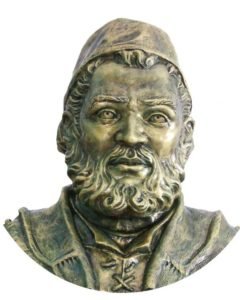
Aloysus Lilius
Aloysus Lilius

The Gregorian calendar was introduced by Pope Gregory XIII from advice given by Italian scientist Aloysus Lilius. Aloysus Lilius was a philosopher, astronomer and all-round very clever guy who we must thank for making our diaries work perfectly. Or almost………

Even adding a leap day every four years, the figures are actually out by 26 seconds per year. So, by the year 4,909 it will need rectifying by a day. But I don’t think that’s something that we at Dairy Diary need to worry about planning just yet (we just have to deal with last-minute decisions to move Bank Holidays by Governments instead!)


#leapyear

#29february

Make yours a 2020 to remember

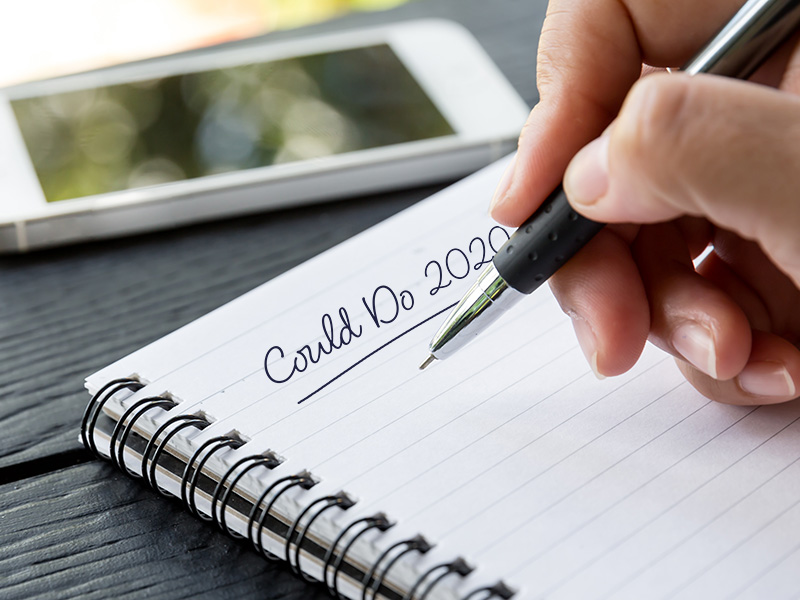
Could-Do-List-2020

The new Roaring Twenties are now in full swing and many of us will be trying to stick to those tricky New Year’s Resolutions.

This year, I’ve decided to make an alternative affirmation, and rather than list the things I shouldn’t do (eat chocolate/drink wine!), instead I’ve made a list of the things I would love to do this year.

This list is without pressure; its title is the ‘Could Do’ list, which means that it would be lovely to achieve but is not essential. That way, I don’t feel as though I have failed if I don’t tick off everything on my list – quite the opposite of a Resolution, which I so often fail at.

The Could Do List comprises things that
I would really love to do in 2020.

With the caveat that they are attainable (take 6 months off for an around the world trip is not on my list!)

I made my list over several days, and when I thought of something else that I really fancy doing, I added it. It’s at the back of my Dairy Diary so that I can refer to it or add to it whenever I choose.

Ranging from the small things (bake bread) so the larger goals (plan a long-haul holiday) I’ve tried to include ideas that will enrich my life and improve my wellbeing (slow down and be calmer). Thus aiming for a happy and healthy 2020.

Why not open your diary today and make your ‘Could Do List’.

It could change your 2020 for the better!


2020 Dairy Diary A5 weeo-to-view diaryIf you don’t have your diary yet don’t worry,
Dairy Diaries are still available.


BUY NOW