Author Archives for Emily Davenport, Head of Dairy Diary

About Emily Davenport, Head of Dairy Diary

Head of Dairy Diary; I'm passionate about producing high quality products that our customers will cherish. I'm also a mum of three and I enjoy cooking, walking, gardening and painting with my family, as well as printmaking (when I find the time!)

Chocolate Whisky Cake

Every Scottish baker has their own recipe for chocolate cake and this one incorporates whisky, which complements the flavour of the chocolate. There is also a hidden ingredient (a Scottish favourite), which helps give the cake its rich, moist texture.
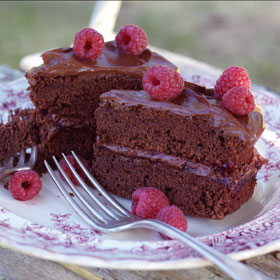
Chocolate Whisky CakePreparation time – 25 minutes
Cooking time – 25 minutes
Calories per portion – 435 Kcal
Fat per portion – 24g of which saturated – 13.6g
Serving – 10
Suitable for vegetarians
Suitable for freezing

Very dark plain chocolate 175g (6oz)
Unsalted butter 110g (4oz), softened
Light brown sugar 175g (6oz)
Cold finely mashed potato 75g (3oz)
Eggs 2, beaten
Self-raising flour 175g (6oz)
Salt 1⁄2 tsp
Milk 4 tbsp
Double cream 125ml (4fl oz)
Icing sugar 50g (2oz), sifted
Whisky 3 tbsp
Raspberry jam 3 tbsp
Raspberries to decorate

1 Preheat the oven to 190°C/375°F/Gas 5 and grease and line two 20cm (8in) Victoria sandwich cake tins. In a heatproof bowl, break 50g (2oz) of the chocolate, and place over a pan of gently simmering water to melt.

2 In another bowl, beat together the butter and brown sugar until pale. Beat in the melted chocolate and mashed potato.

3 Gradually beat in the eggs, adding a little of the flour with each. Sift the remaining flour and salt into the mixture and add the milk. Gently fold together until well combined.

4 Divide the mixture equally between the prepared tins and smooth over the tops. Bake for about 25 minutes until risen and springy-firm to the touch. Turn onto wire racks to cool completely.

5 Melt the remaining chocolate as above and cool for 10 minutes. Add the cream, the icing sugar and the whisky. Carefully whisk together until thick and creamy. Spread the jam over one half of the cake and then spread half the chocolate cream on top. Sandwich together with the other half. Spread the remaining chocolate cream on top. Decorate with fresh raspberries before serving.

Cook’s tip
If whisky isn’t your preferred tipple, dark rum or brandy also works well with chocolate, or replace with orange juice for a non-alcoholic version.

Recipe taken from Around Britain Dairy Cookbook.

Top Ten Aromatherapy Oils

Top 10 Aromatherapy Oils

I like to think of myself as quite grounded and logical, not someone who is swayed by anything non-tangible. However, I am a strong believer in the power of aromatherapy.

During life’s low points, physical or emotional, they really can help.

Many years ago, we featured an article on aromatherapy in the Dairy Diary. It seemed like the perfect excuse to give it a go. It works wonders for me in times of stress (it even helped me feel better during fertility treatment).

Here’s the low-down:

Cedarwood
Is a powerful antiseptic and mild astringent.
■ This oil is good for treating acne: See 2, 4 or 7.
■ To improve bronchitis and respiratory problems: See 1, 4, 7, or 9.
■ To help control dandruff: See 5.
■ To calm nervous tension: See 1, 6 or 7.

Chamomile
Is an anti-inflammatory, analgesic, antiseptic and disinfectant.
■ To soothe dull aches and pains: See 2 or 7.
■ To treat acne: See 2 or 6.
■ To calm anxiety and PMT or treat insomnia: See 1, 7, 9 or 10.
■ To treat indigestion: See 1 or 7.
■ To help control and soothe eczema: See 1 or 2.
■ To help treat a tension headache or migraine: See 1, 5, 6, 7 or 9. 

Eucalyptus
Is an antiseptic, anaesthetic and bactericidal.
■ To relieve a chest infection or catarrh, colds and flu: See 1, 5, 6, 7 or 9.
■ To help control high blood pressure: See 5, 6, 7 or 9. 

Frankincense
Is an astringent, anti-inflammatory and pulmonary antiseptic.
■ Can help with cystitis: See 1 or 7.
■ To bring calm in stressful situations: See 1, 5, 7 or 9.
■ To rejuvenate dry or mature skins: See 1, 2 or 6.
■ To help colds, coughs and bronchitis: See 1, 5 or 6.
■ To calm and uplift, when suffering from mild depression: See 1,5 or 7.
■ To help control blood sugar levels in diabetes: See 1 or 7.
■ To relieve discomfort associated with shingles: See 1 or 7. 

Jasmine
Is an effective antiseptic, diuretic and detoxifier.
■ To help with emotional pain and baby blues: See 1, 5, 7 or 9.
■ To ease symptoms in the early stages of flu: See 1, 3, 5, 6 or 7.
■ To ease period pain: See 1 or 7. 

Juniper
Is a diuretic and detoxifier.
■ To boost circulation and help with cellulite: See 1 or 7.
■ To calm emotions and help with confusion: See 1, 5 or 7.
■ To help with eczema: See 2. 

Lavender
Is an analgesic, antidepressant, decongestant, antibiotic, antiseptic and sedative.
■ To help prevent scarring from minor burns: See 2.
■ For insomnia: See 1, 5, 7 or 10.
■ To calm and soothe PMT: See 1, 5, 6, 7 or 9.
■ To treat acne, stings and eczema: See 2. 

Patchouli
Is an antidepressant, antiseptic, anti-inflammatory and stimulant.
■ To treat Athlete’s Foot or cracked skin: See 3 or 7.
■ To control dandruff: See 4. 

Peppermint
Is a stimulant and antiseptic.
■ To freshen breath: See 8.
■ To stimulate the mind: See 5. 

Rosemary
Is a stimulant, analgesic, antiseptic and astringent.
■ To soothe aches and muscular tension following exercise: See 7.
■ To help alleviate rheumatism and arthritis pain: See 1, 2 or 7.
■ To treat spots: See 2 or 6.

How to administer each essential oil

1 Bath Add 5 drops of essential oil to the bathwater, lie back and relax.

2 Compress Add a drop of oil to 1 litre (1¾ pints)of warm water and lay a piece of gauze on thesurface of the water. Place the gauze onto theaffected area and leave for 10 minutes.

3 Footbath Add 3 drops of oil to a bowl of warm water and soak feet for 15 minutes.

4 Hair rinse Add 1 or 2 drops of oil to 1 litre (1¾ pints) warm water and use as a final rinse.

5 Handkerchief Put a few drops of oil onto a handkerchief or tissue and inhale when required.

6 Inhalation Once a week, add up to 10 drops of oil to a bowl of hot water, put a towel over the head and inhale the steam.

7 Massage Add 10 drops of pure essential oil to 20ml (¾fl oz)of sweet almond or grape seed oil and rub into the skin.

8 Mouthwash Add 1 drop of oil to ½  litre (18fl oz) of water, swill around the mouth and spit out.

9 Oil burner Add up to 5 drops of oil to water in an oil burner.

10 Pillow Put a couple of drops of oil on your pillow just before you go to bed.

Follow us on Twitter! Follow us on Twitter

Follow us on Facebook! Become a fan

Squash, Bean and Stilton Risotto

Rich and creamy with a fantastic colour, this combination of textures and flavours results in simple, modern, comfort food!

This Squash, Bean & Stilton Risotto is a Dairy Diary recipe.

CLICK HERE FOR RECIPE

For more delicious recipes visit the Dairy Diary Recipe Collection.

Follow us on Twitter! Follow us on Twitter

Follow us on Facebook! Become a fan

It’s St David’s Day but why the daffodil?

Not only is it new sofa day (sorry, I am quite excited!) on Thursday, it’s also St David’s Day.

David was a Celtic monk who lived in the 6th century. He was one of the early saints who helped to spread the word about Christianity in Pagan Britain. He also founded a monastery (in the place now known as St David’s), which helped to clothe and feed the poor.

St David’s Day has been celebrated ever since 1120, when David was canonised by the Pope.

St David’s is a lovely, miniature city, with a particularly spectacular cathedral. I have fond memories of wandering its lanes surrounding the ecclesiastic buildings, enjoying the sunshine and quiet whilst getting a very tiny little one off to sleep.

So, why is the daffodil worn to commemorate St David’s Day?

In comparison with the ancient Welsh associations of the leek, the daffodil has only recently assumed a position of national importance. An increasingly popular flower during the 19th century, especially among women, its status was elevated by the Welsh-born prime minister David Lloyd George, who wore it on St David’s Day in 1911.


Fancy a go at some St David’s Day crafts with the children or grandchildren?

I am going to give these Activity Village ideas a try:

http://www.activityvillage.co.uk/handprint_daffodil.htm perfect for the twins.

http://www.activityvillage.co.uk/bunch_of_daffodils.htm great for Isaac (provided he can be tempted away from the train track for long enough!)

Have fun!


Sausage and Leek Supper

I think this is the most requested recipe of all time. People absolutely love it and, despite mislaying their book, can’t live without it! Enjoy it everyone, it’s perfect for St David’s Day and it’s legendary.

CLICK HERE FOR RECIPE

A recipe from The Dairy Book of Home Cookery. For more delicious recipes visit the Dairy Diary Recipe Collection.

Sausage & Leek Supper

I think this is the most requested recipe of all time!

This Sausage & Leek Supper recipe is perfect for St David’s Day! Celebrate with this hearty dish or enjoy this recipe any time. A recipe from The Dairy Book of Home Cookery. For more delicious recipes visit the Dairy Diary Recipe Collection.

Tips for a pretty garden display

After such a bizarre winter, we already have crocuses peeping though the turf in our front garden.

It is so lovely to see signs of spring already, but I must admit at this time of year I get impatient for REAL spring.

I want to be out in the garden having a good tidy up and making everything pretty once more. It looks so barren and untidy at the moment – especially as we are partway through laying a new patio.

This little project from our Seasonal Garden Ideas book will inject some spring colour into any dejected looking garden. Or even brighten up a window box.

Give it a try and cheer up
everyone in your street.

Pretty in Pink

Pretty in Pink hanging basket

Make a pretty basket of pink hyacinths special by adding hoops of pussy willow twigs with the soft grey catkins just bursting out – a lovely display that should last for several weeks.

Pussy willow twigs are available in early spring, either in hedgerows or from florists. Pot-grown hyacinths can be found in garden centres from January through to May or even later.

Planting up a basket takes about an hour.

Plants required
Ten to twelve pink Dutch hyacinths just coming into flower.
Six to eight pussy willow twigs each about 45cm (18in) long.

Equipment required
Rustic-weave basket.
Hanging-basket liner (plastic, hessian, felt or moulded paper).
Bulb compost to fill.
Several handfuls of moss to tuck around the base of the hyacinths.
Trowel.

1 Place the liner you have chosen in the bottom of the basket, pricking holes through for drainage if needed. Fill the basket two-thirds full with bulb compost.

2 Carefully remove each hyacinth, one at a time, from their pots and plant in the basket, adding more compost and setting each one to the same depth as it was in its pot. Place them as close together as you can, so the heavy flowerheads will support each other, and firm in well.

3 Tuck moss loosely around the base of the hyacinths to cover the soil completely. Water lightly.

4 Wedge the bottom end of a pussy willow twig into the basket weave then bend it over to form a hoop. Tuck the tip of the twig securely into the basket, then repeat with the other twigs all round the basket, overlapping the twigs slightly as you go.

5 Position your basket in a sunny spot for best display. The furry grey catkins will eventually turn bright yellow as they open.

Tips
Take great care not to knock the pussy willow catkins off the twigs as you handle them – they are quite fragile. If the hyacinth stems start bending over, insert thin bamboo canes into the compost and tie the stems to them as discreetly as possible with soft string. Bring under shelter if heavy rain is threatened.

Note
Reuse your rustic basket for a summer display by planting with nasturtiums or begonias.

Aftercare
By its very nature this is a temporary display. When the hyacinth flowers have withered, stop watering and allow the foliage to turn brown. Then remove the bulbs from the basket, clean them carefully and store in a dry, dark place until autumn, when you can plant them out in the garden. Discard the pussy willow twigs when the catkins have flowered.

Project taken from Seasonal Garden Ideas

And of course, don’t forget it’s Shrove Tuesday tomorrow.

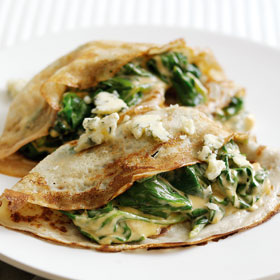
Try this amazing recipe for Spinach Pancakes
(and follow with some plain ones sprinkled
with lemon and sugar!)

Let us know what your favourite pancakes are.