Monthly Archives: April 2010

I’m going to grow my own!

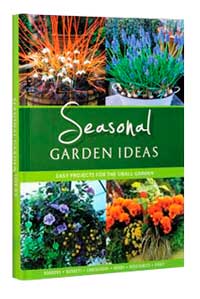
With the launch of our new gardening book – Seasonal Gardening Ideas – I have been totally inspired to ‘grow my own’ this year.

I am not going to try and be too ambitious, as I have never done it before but I am going to start with these fun and quirky Pot Herbs for the Kitchen. They look great and I will have a constant supply of my favourite herbs right next to the kitchen door.

Seasonal Garden Ideas features many more fabulous mini-projects for the whole year and easy enough for anyone to tackle. It’s on sale now just in time for the start of the gardening season

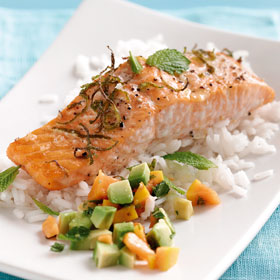
And when the herbs are established try this delicious recipe for Salmon with Minty Salsa taken from Clever Cooking for One or Two.

Win a copy of Clever Cooking for One or Two

Simply enter here before Tuesday 4 May – we have ten to give away. Good luck.

Follow us on Twitter! Follow us on Twitter
Follow us on Facebook! Become a fan

Herbs for the Garden

Fresh herbs give a great lift to many foods – so grow your own in pots sited near the kitchen for ease of picking. And why not choose some colourful, fun containers to plant in?

Sow seeds in March, or buy small herb plants in April or May, pot up at once and start picking leaves as soon as the plants have grown slightly. Plant in a sunny position. The job will take about an hour.

HerbsPlants required
Seed packets or small plants of parsley, thyme, marjoram (oregano), sage, mint and rosemary.

Equipment required
Six small plastic pots for potting up seedlings bought at the garden centre.
Seed tray, modular cell system or jiffy pots for sowing seeds, if using.
Five containers such as the enamel kettles.
Soil-based potting compost and proprietary seed compost if using.
Broken crocks for drainage.
Trowel.

1 Fill the seed tray or modular cell system with seed compost and sow your seeds according to the instructions on the packets, or sow in jiffy pots according to the manufacturer’s instructions. Keep on a kitchen windowsill while the seeds germinate, then move them outside when all danger of frost is past.

2 When the seedlings are large enough to handle, pot them on into the plastic pots using potting compost and lining with broken crocks for drainage.

3 Or, line the plastic pots with broken crocks and fill with potting compost, into which you have mixed some sharp sand (if using). Then plant your garden centre seedlings, place into the containers and set out in an attractive arrangement. In general, allow one herb per container, but if the container is big enough, put several in together – here rosemary, parsley and mint have been put in the central container.

4 Place the young herb plants outside only when all danger of frost is past. If you’re uncertain, place them outside on sunny days and bring them in at night until the weather warms up enough for them to be left outside permanently.

5 Pick and use the leaves regularly. All these herbs can grow quite large and, by the end of summer, may well have outgrown their containers unless you keep them under control.

Notes
Most herbs do best in full sun. They don’t require rich soil, but they must not be allowed to get waterlogged, so good drainage is essential. Rosemary, sage, thyme and marjoram are tough, shrubby plants and can be kept going for years if put into the ground or grown in large enough pots. Mint and parsley are herbaceous and will die down in winter, but reappear again in spring.

Aftercare
Regular picking is needed, and watering with care.

Project taken from Seasonal Garden Ideas

Follow us on Twitter! Follow us on Twitter
Follow us on Facebook! Become a fan

Salmon with Minty Salsa

Preparation time 10 minutes
Cooking time 15 minutes
Calories per portion 596 Kcal
Fat per portion 45g
of which saturated 10g
Serves 2

Salmon fillets 2 (approximately 150g (5oz) each), skinned
Lime ½ , grated zest and juice
Butter 15g (½ oz)
Salt and freshly ground black pepper
Cooked rice to serve, optional

For the salsa
Olive oil 2 tbsp
Lime ½ , grated zest and juice
Papaya ½ –1 small, peeled, deseeded and chopped
Avocado 1, stoned, peeled and chopped
Chopped mint 2 tbsp

1 Preheat the oven to 200°C/400°F/Gas 6. To prepare the salmon, brush the lime juice over the fish. Place a knob of butter on each fillet and scatter with the lime zest and season with salt and pepper.

2 Place the fish on a buttered baking sheet and bake in the centre of the oven for 12–15 minutes, or until it is just starting to turn golden in colour.

3 To make the salsa, tip the olive oil, lime zest and juice into a bowl and add the papaya, avocado and mint. Mix well. Season to taste.

4 Serve the fish on a bed of rice. with the salsa spooned on to the plate.

Cook’s tip
If the papaya is large, then only use half of it. Keep the other half wrapped in a plastic bag in the fridge for up to 2 days.

Shopper’s tip
Make sure the avocado and papaya are ripe to get the best flavours. Buy the fruits a few days early and allow them to ripen.

This scrummy summery recipe is taken from Clever Cooking for One or Two.

Follow us on Twitter! Follow us on Twitter
Follow us on Facebook! Become a fan

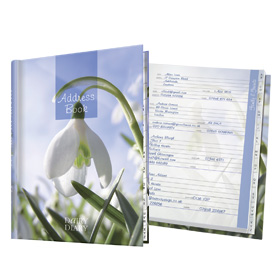
Win A Dairy Diary Address Book

And now for a little treat……win a Dairy Diary address book.

We have ten up for grabs, so just enter your details at http://www.dairydiary.co.uk/mailinglist.html before Monday 26th April and you could win! Easy!

Happy St George’s Day

Hi all, a very quick blog this week as I am holidaying in the Cotswolds.

Let’s hope Nick survives alone in the office all week!

Not only will we be celebrating being on holiday but of course we can celebrate St George’s Day on Friday. http://www.bbc.co.uk/religion/religions/christianity/saints/george_1.shtml

Regardless of what you think about St George, the myths and legends, it’s the perfect excuse to celebrate fantastic English food. In our cosy cottage we will be indulging in this fabulous traditional roast beef dinner from Around Britain Dairy Cookbook. Always a winner with all the family!

Saint George’s Day Roast Beef

To early Christians, the legendary slaying of a dragon by Saint George symbolised Christ’s triumph over evil. But it was not until the mid 14th century that Saint George was made patron saint of England, reputedly by Edward III when he founded the Order of the Garter in St George’s name.
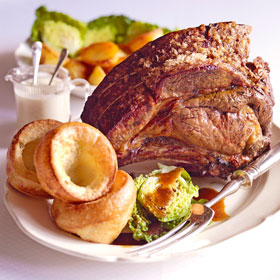
Roast beefPreparation time: 30 minutes
Cooking time: approximately 2 hours
Serves 6

Fore-rib of beef, approximately 2kg (4lb 8oz)
Olive oil 1 tbsp
Salt and freshly ground black pepper

For the Yorkshire pudding:
Plain flour 110g (4oz)
Egg 1 large
Milk, full cream 300ml (1/2 pint)

For the hot horseradish sauce:
Butter 15g (1/2oz)
Plain flour 15g (1/2 oz)
Milk, full cream 300ml (1/2pint)
Hot horseradish, freshly grated (2-3 tsp)
Soured cream 3 tbsp

1 Preheat the oven to240degC/475deg.F/Gas 9. Wipe the beef well with kitchen paper, and then smear it all over with the olive oil. Sprinkle the fat liberally with salt.

2 Place the beef in a roasting tin, standing it upright, and cook for 20 minutes, then reduce the oven temperature to 180°C/350°F/Gas 4 and continue cooking for 1 hour, basting frequently – this cooks the beef to medium-rare. For meat that is more well done, continue cooking until done to your liking – testing every 10-15 minutes.

3 While the beef is cooking, prepare the batter for the Yorkshire pudding. Sift the flour and a good pinch of salt into a mixing bowl and make a well in the centre. Break the egg into the centre of the flour, and then gradually start to whisk it into the flour –preferably with a hand-held electric whisk. As the mixture starts to thicken, gradually add the milk – whisking well until all the milk is incorporated and the batter is smooth. Cover and leave to stand.

4 Meanwhile, make the horseradish sauce. Melt the butter in a small saucepan, stir in the flour, add the milk and bring to the boil – stirring continuously until the sauce thickens. Stir in the grated horseradish, season well with salt and stir in the cream. Cover the surface of the sauce closely with cling film, cover the pan with a lid and keep warm.

5 When the beef is done to your liking, carefully remove it from the roasting tin onto a serving plate. Loosely cover with foil and leave to stand until ready to carve. Increase the oven temperature to 220degC/425degF/Gas 7.

6 Skim 3 tablespoons of the fat from the roasting tin into a 19cm (71/2in) round, ovenproof glass or metal pie plate, and heat in the oven until sizzling hot. Stir the batter, carefully pour it into the pie plate and cook for 30-40 minutes, until the pudding is very well risen, golden brown, and crispy.

7 To make the gravy, skim all but approximately 2 – 3 tablespoons of the fat from the roasting tin into a small bowl and use for roasting potatoes. Stir flour into the fat remaining in the tin, and add the beef stock.

8 Place the roasting tin over a moderate heat and bring to the boil stirring continuously, and scraping the browned residue from the bottom of the tin. Simmer for 5 minutes, season well with salt and pepper and then strain into a warmed gravy boat.

8 While the gravy is simmering, reheat the horseradish sauce and pour it into a serving jug or bowl.

Recipe taken from Around Britain Dairy Cookbook.